







Word Count: Approx. 1,300 words | Reading Time: About 6 minutes
If you usually run outdoors, the most important thing about buying a backup treadmill is not finding something that completely replaces your outdoor routes. It is finding a machine that lets you continue the workout you had planned on days when running outside is not an option.
That means there are three things to prioritise: whether the speed range covers your usual running pace, whether the incline provides enough training variety, and whether the treadmill is easy to store when the weather is good and you do not need it.
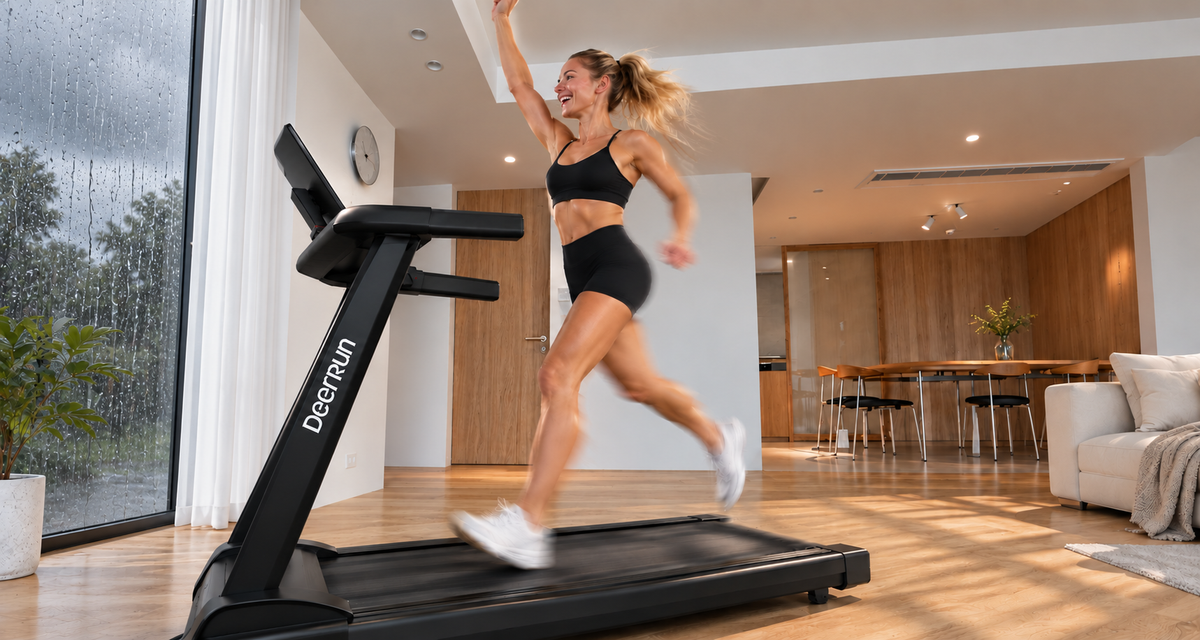
Rain, colder temperatures or earlier sunsets should not automatically mean, “I’m not running today.” A good backup treadmill for outdoor runners should let you switch from outdoor to indoor running without having to redesign your entire workout.
1. When Rain Moves Your Run Indoors, the Speed Should Match Your Usual Running Rhythm
For outdoor runners choosing a backup treadmill, the first thing to make sure of is that it does not just support walking—it should also handle the running you actually do.
If you originally planned an easy run but can only do low-speed walking after moving indoors because of the rain, the workout itself has already changed.
The DeerRun Z10 Pro has a 1–12 km/h speed range, covering everything from warm-up walking to everyday jogging and running. When the weather suddenly changes, you can adjust the speed according to the purpose of that day's original workout instead of moving indoors and settling for “just walking for a while”.
For outdoor runners, a higher maximum speed is not automatically better. What matters more is whether the treadmill can cover the speeds you actually run most often.
2. When You Lose the Natural Hills Outdoors, Incline Can Bring Some Training Variety Back
If your usual outdoor route includes bridges, hills or natural elevation changes, a backup indoor treadmill should ideally let you change the incline as well.
The DeerRun Z10 Pro offers up to 12% automatic incline. You can adjust it directly during your run without stopping to make manual changes.
If you usually run on flatter routes, you can keep the incline low. If your original workout included some elevation changes, you can add different incline levels. And if you want to increase the training challenge, you do not have to rely only on running faster.
Indoor running cannot completely reproduce a real outdoor route, but being able to adjust both speed and incline at least allows you to preserve some of the variation in your original workout.
A backup treadmill is not about copying outdoor running. It is about keeping your workout from shrinking simply because the location changed.
| Incline | Training Purpose | When to Use It |
|---|---|---|
| 0–3% | Closer to flat running; useful for warming up and maintaining a steady rhythm | Everyday easy runs and pre-run warm-ups |
| 4–6% | Noticeably increases the challenge without requiring a higher speed | When your original route included elevation changes, or when you want more challenge without speeding up |
| 7–12% | Closer to uphill training; many people may choose to walk at these inclines | Replacing steeper uphill sections of an outdoor route |
3. When Rain Changes Your Plans, Here’s a Simple 30-Minute Indoor Run
If it suddenly starts raining outside, you do not need to search for a completely new and complicated indoor workout.
Simply keep the time you originally set aside for running and try this 30-minute rainy-day treadmill run:
| Time | Speed | Workout |
|---|---|---|
| 0–5 min | 4.0–4.8 km/h | Easy walking warm-up |
| 5–15 min | 6.4–8.0 km/h | Maintain a steady running rhythm |
| 15–25 min | 6.4–8.0 km/h | Vary the incline between 3–6% |
| 25–30 min | 3.2–4.0 km/h | Gradually slow down and finish with an easy walk |
These speeds are not fixed standards. You can adjust them according to your usual running rhythm. The important thing is to preserve the structure:
Warm-Up → Steady Run → Training Variation → Cooldown
That way, the weather changes and the training location changes, but the workout you planned for the day does not have to be completely thrown out.
4. A Backup Treadmill Doesn’t Need to Stay Out Every Day—On Sunny Days, It Should Give Your Space Back
If you will mainly use the treadmill when it is raining, the weather is poor or going outside is not convenient, storage matters more than keeping the machine permanently set up.
The DeerRun Z10 Pro measures approximately 130.4 × 68 × 119.4 cm when in use, with a footprint of about 0.89 m²—roughly comparable to the floor space of a small desk.
When folded, it measures approximately 138.2 × 68 × 14.3 cm, with a folded profile of only 14.3 cm. Combined with its built-in transport wheels, you can fold it down and move it towards a wall or another suitable storage area once the weather clears and you return to outdoor running.
The ideal backup setup is simple: ready to keep your training going when it rains, but easy to put away when the sun comes back out.

5. If You Mix Outdoor and Indoor Running, Don’t Let Your Training Record Break Apart
Your training location can change, but your weekly training rhythm does not have to.
If you normally run outdoors and switch to the DeerRun Z10 Pro when it rains, PitPat can continue recording your indoor training. You can also use virtual routes and challenges so that the indoor session does not become a completely separate activity.
The real value here is not simply having another app. It is allowing your outdoor runs and indoor backup runs to remain part of the same training habit.
You do not need to start a completely different exercise routine simply because the weather changes.

6. A Rainy-Day Backup for Outdoor Runners: How to Know Whether a Treadmill Fits Your Needs
If you mainly run outdoors but want to keep training when it rains, temperatures drop or the weather makes outdoor running impractical, the right indoor treadmill can serve as a reliable backup to your outdoor routine.
When choosing one, focus on a few key factors:
- Speed range: DeerRun Z10 Pro supports 1–12 km/h, covering warm-up walking, easy jogging and everyday running.
- Incline adjustment: up to 12% automatic incline, helping add some of the elevation changes you would normally encounter outdoors.
- Footprint: approximately 0.89 m² when in use, roughly comparable to a small desk.
- Storage design: approximately 14.3 cm high when folded, with built-in transport wheels that make it easier to put away when the weather is good and you return to outdoor running.
- Training record: compatible with PitPat, making it easier to include indoor runs in your regular training record.
For outdoor runners, the point of a backup treadmill is not to completely replace outdoor running. It is to keep your training plan moving when the weather does not cooperate.
Before choosing one, ask yourself three questions:
- Is your usual running pace around 4:58 min/km (8:00 min/mile) or slower?
- Do your regular training routes include some elevation changes?
- Would you like to fold and store the treadmill when you are running outdoors on sunny days?
If your answer to all three is “yes”, then the DeerRun Z10 Pro may be a better fit as your rainy-day backup treadmill.
Rain Doesn’t Have to Cancel Today’s Run
Let the DeerRun Z10 Pro keep your training plan moving when the weather turns bad.
Explore DeerRun Z10 Pro →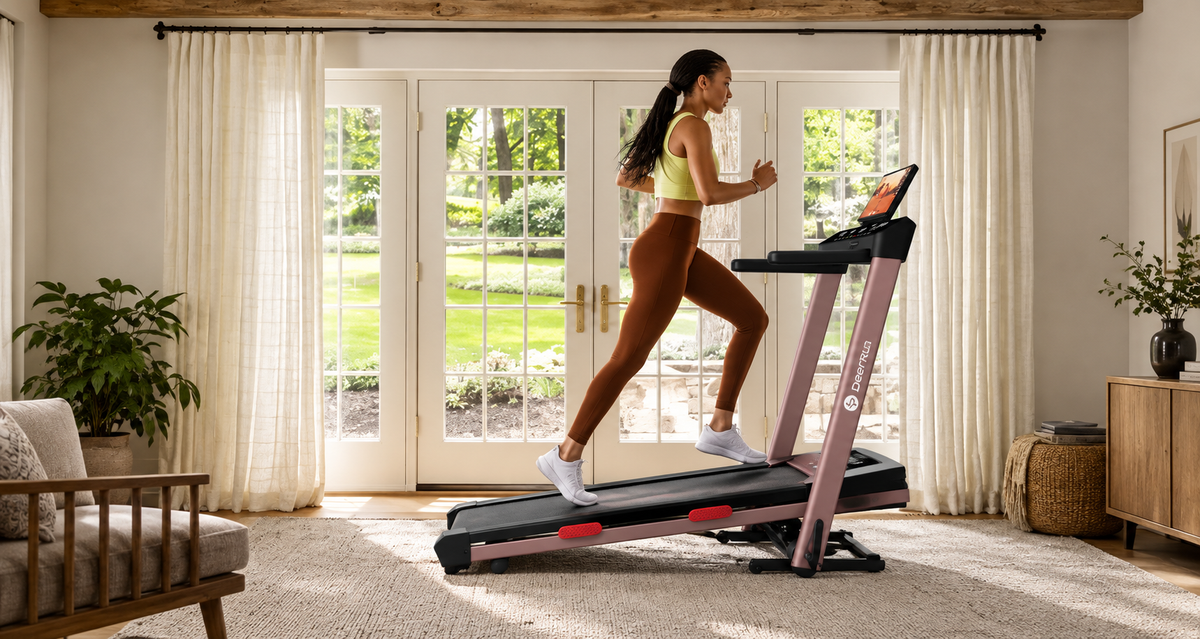



Leave a comment
All comments are moderated before being published.
This site is protected by hCaptcha and the hCaptcha Privacy Policy and Terms of Service apply.