








Word Count: Approx. 1,450 words | Reading Time: About 7 minutes
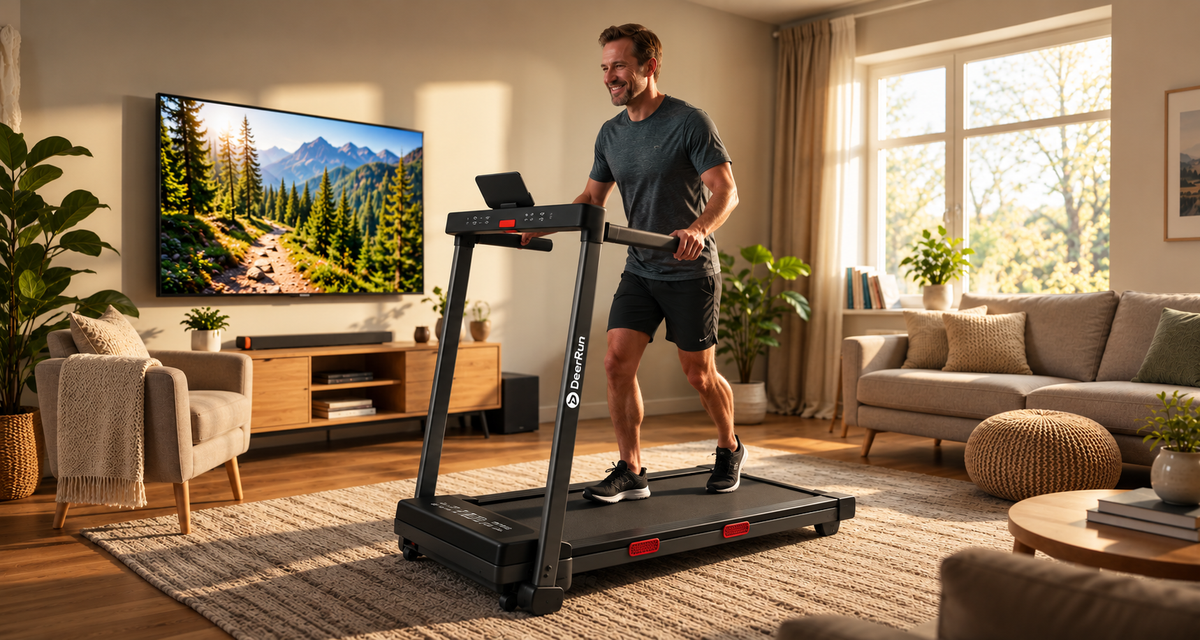
Thinking about putting a treadmill in your living room and running for 20–30 minutes after work? With a television, computer and other household appliances nearby, you may wonder: Can a home treadmill use a normal wall outlet? And how safe is it for regular home use?
Home treadmill electrical safety depends on more than the plug and power cord. Internal insulation, electric-shock protection and the overall electrical design of the equipment matter too.
The DeerRun Z10 Pro has undergone relevant SGS third-party electrical safety testing, providing documented evidence for safety details that are difficult to judge simply by looking at the treadmill from the outside.
1. Three Electrical Safety Details to Check Before Using a Treadmill at Home
A treadmill relies on its motor to keep the running belt moving throughout your workout. If you plan to use a home treadmill in your living room or bedroom, pay attention to these three details.
- Power outlet and electrical supply: Check that the treadmill's rated voltage and power requirements are compatible with your household electrical supply. Use an appropriate wall outlet as specified in the product manual, and avoid sharing an unsuitable power strip with other high-powered appliances.
- Power cord and plug: Avoid allowing furniture to crush the power cable or repeatedly bending it in the same place. If the plug becomes loose or the power cord is visibly damaged, stop using the treadmill and contact customer support.
- Placement and ventilation: Leave sufficient space around the treadmill for both exercise and heat dissipation. Do not position it tightly against furniture simply to save floor space.
Checking the treadmill's power requirements before buying and inspecting the electrical connections when the machine arrives can reduce problems caused by unsuitable outlets, damaged wiring or poor placement.
2. What Does LVD Electrical Safety Testing Actually Cover?
When buying a treadmill, it is easy to compare maximum speed, incline and running performance. Internal electrical protection is much harder to assess from the outside.
During a workout, you may touch the handrails, control panel and operating buttons while the motor and electronic components continue running.
Electrical safety testing associated with the EU Low Voltage Directive (LVD) focuses on areas that are directly relevant to normal home use.
- Electrical protection during normal use: Insulation and electric-shock protection testing helps assess whether the equipment meets the relevant protection requirements when users touch areas such as the handrails and controls.
- Safety during continuous exercise: Whether you walk for 20 minutes or complete a longer indoor run, the motor and electronic components continue operating. Temperature-rise testing helps assess whether the equipment meets safety requirements under specified operating conditions.
- Protection under specified abnormal conditions: Electrical equipment also needs to be considered under certain abnormal operating conditions. Relevant testing provides another way to evaluate whether appropriate electrical protection is present.
These tests give consumers a way to look beyond visible workout features and understand whether the treadmill's internal electrical safety design has undergone actual third-party evaluation.
The DeerRun Z10 Pro has undergone relevant SGS third-party electrical safety testing (Report No. 30323S; Issuing Organisation: SGS CEBEC; Report Date: 20 September 2026).
The reported results state that the tested sample met the applicable electrical safety and electromagnetic field requirements.
From electrical protection when users touch the treadmill to safety considerations during continuous motor operation, these third-party results provide another concrete reference for people planning to walk, jog or complete incline treadmill workouts at home.

3. How Does the DeerRun Z10 Pro Fit Into Everyday Home Workouts?
The DeerRun Z10 Pro supports speeds from 1–12 km/h, up to 12% automatic incline and a foldable design.
As of 20 October, the US DeerRun website listed 230 customer reviews for the model, with an average rating of 4.77/5.
3.1 From Flat Jogging to Incline Walking: More Ways to Train
Exercising at home does not mean repeating exactly the same workout every day.
On an easier day, you can choose low-speed Walking. When you want more of a challenge, you can increase either the speed or the incline.
The DeerRun Z10 Pro supports everything from everyday Walking to Jogging and Running, while its 12% automatic incline gives you another way to adjust training intensity.
The incline can be adjusted through the remote control or App, so you do not have to stop the treadmill every time you want to change the grade.
For example, a simple home cardio session could look like this:
| Stage | Time | Example |
|---|---|---|
| Warm-Up | 5 min | Flat Walking at an easy pace |
| Incline Section | 10 min | Increase the incline while keeping the speed manageable |
| Cool-Down | 5 min | Gradually reduce the incline and speed |
Adjusting the settings based on how you feel that day makes it easier to vary your home treadmill workouts without forcing every session to be harder than the last.
Verified customer @Dee Torres said the incline feature was the main reason for buying the treadmill. Although initially concerned that the machine might not feel sturdy enough, the customer reported being very satisfied after using it and felt the purchase offered good value.

3.2 Fold It Away After Your Workout Without Taking Over the Living Room
The DeerRun Z10 Pro measures approximately 130.4 × 68 × 119.4 cm when unfolded, with a footprint of about 0.89 m²—roughly comparable to the floor space occupied by a small desk.
When folded, it measures approximately 138.2 × 68 × 14.3 cm. Its 14.3 cm folded thickness makes it easier to plan a storage location based on the available space in your home.
Verified customer @Alberta Howard highlighted how well the treadmill fitted into the available exercise space while still providing a sufficiently challenging workout.

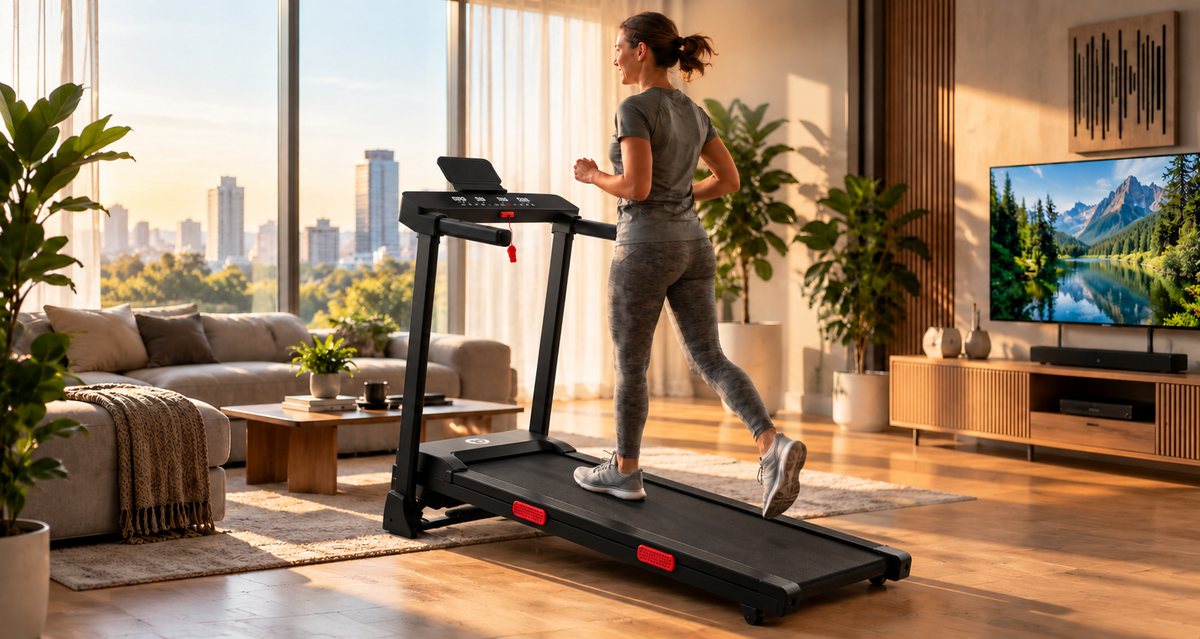
For households without a dedicated gym, a foldable treadmill can help free up living space after the workout is finished.
4. A One-Minute Home Treadmill Safety Check Before Every Workout
Before starting your treadmill, take a minute to check these four areas.
| What to Check | What to Look For |
|---|---|
| Power Outlet | Voltage and power ratings meet the treadmill's requirements |
| Power Cord and Plug | No visible damage, loose connections or pinched cables |
| Surrounding Area | Enough clearance for exercise and ventilation |
| Before Starting | Safety key and controls are functioning normally |
If you notice a damaged power cord, an unusually hot plug or a burning smell, stop using the treadmill. Disconnect the power when it is safe to do so and contact customer support.
5. FAQ: Home Treadmill Electrical Safety
5.1 Can I Plug My Treadmill, TV and Computer Into the Same Power Strip?
It is better to use a wall outlet that meets the treadmill's electrical requirements.
Avoid sharing an unsuitable power strip with other high-powered appliances if this could exceed its rated capacity. Always follow the power supply instructions in the treadmill's user manual.
5.2 Can I Leave My Treadmill Plugged In All the Time?
Switch off the treadmill when it is not in use.
If you are folding it for storage or will not use it for an extended period, disconnect the power according to the product manual.
Also make sure the power cord is not trapped or crushed beneath furniture.
5.3 Which Electrical Components Should I Inspect Regularly?
Periodically check the plug, power cord and control panel for visible damage.
During operation, pay attention to unusual smells, fault messages or abnormal plug temperatures.
If you notice a problem, stop using the treadmill and contact customer support. Do not open the motor housing or attempt to repair electrical components yourself.
6. Conclusion: A Good Home Treadmill Should Deliver Both Performance and Electrical Safety
When choosing a home treadmill, speed, incline and foldable storage are important—but so are the equipment's electrical requirements and third-party electrical safety testing.
The DeerRun Z10 Pro combines documented SGS third-party electrical safety testing with a 12% automatic incline and a space-saving foldable design.
For home users, that means you can consider both how the treadmill performs during Walking, Jogging and incline training and what documented testing supports the electrical design behind the machine.
Check the outlet, inspect the power cord, leave enough ventilation space and pay attention to abnormal heat or smells. Good home treadmill use starts with both suitable training settings and basic electrical safety habits.
Workout With Confidence, Right at Home
From everyday Walking to 12% incline training, choose a speed and workout style that fits your routine with the DeerRun Z10 Pro.
Explore DeerRun Z10 Pro →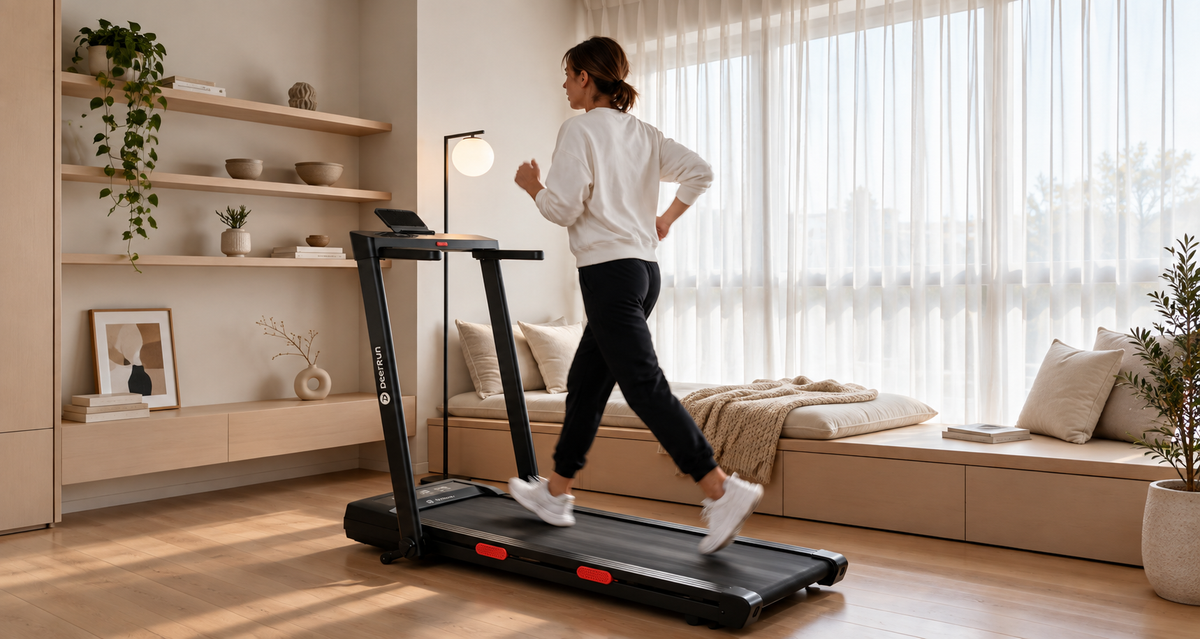


Leave a comment
All comments are moderated before being published.
This site is protected by hCaptcha and the hCaptcha Privacy Policy and Terms of Service apply.