








Word Count: Approx. 1,600 words | Reading Time: About 7 minutes
You have been walking for 30 minutes a day, but after several weeks, the number on the scales has barely changed. Does that mean your walking routine is not working?
Not necessarily.
Body weight is only one way to measure progress. The benefits of regular walking can also show up in your cardiorespiratory fitness, post-meal blood sugar response, blood pressure, sleep and ability to handle everyday physical activity.
The Physical Activity Guidelines for Americans explain that physical activity can provide important health benefits without requiring noticeable weight loss first. For adults, the recommended range is 150–300 minutes of moderate-intensity aerobic activity per week.
So instead of checking the scales every day, try keeping your walking speed, workout duration and incline relatively consistent for several weeks and asking yourself one question:
Is the same 30-minute walk becoming easier to complete?

1. Change One: The Same 30-Minute Walk Starts Feeling Easier
After you have been walking regularly for a while, one useful way to see whether your fitness is changing is to compare how you perform under the same conditions.
The simplest approach is to choose an easy-to-repeat treadmill walking test:
4.8 km/h (3 MPH) × 30 Minutes × 0% Incline
During Week 1, you may notice that your breathing becomes noticeably faster by the end of the session. Several weeks later, the exact same 30-minute walking workout may already feel much easier.
You can record:
- Whether you can complete the full 30 minutes continuously.
- How tiring the same walking speed feels.
- Whether you need to reduce your speed part-way through.
- How quickly you feel recovered after finishing.
The goal is not to chase a particular heart-rate number. What matters is keeping the test conditions reasonably consistent and seeing whether the same amount of walking becomes easier over time.
If Week 4 feels noticeably easier than Week 1, that is meaningful progress worth recording—even if your body weight has not changed very much.
2. Change Two: Walking After Meals May Change Your Post-Meal Blood Sugar Response
If you struggle to find one uninterrupted 30-minute block, you can also split your daily walking into shorter sessions.
The second edition of the Physical Activity Guidelines for Americans removed the previous rule that physical activity had to last at least 10 minutes to count. Shorter periods of movement can still contribute to your overall daily activity.
A 2023 systematic review and meta-analysis published in Sports Medicine included 8 randomised crossover trials involving 116 participants.
The results suggested that exercise after a meal was more favourable for reducing acute post-meal glucose excursions than exercising before a meal or remaining inactive afterwards. However, the included crossover trials were judged to have an overall high risk of bias.
A separate 2026 systematic review and meta-analysis published in Obesity Reviews included 53 studies, with 39 included in the quantitative analysis.
Compared with prolonged sitting, interrupting sedentary time with short bouts of activity was associated with lower post-meal glucose and insulin responses, with walking breaks showing particularly noticeable effects in the analysis.
So you do not necessarily need to save all 30 minutes for the evening. You could try:
10 Minutes After Breakfast + 10 Minutes After Lunch + 10 Minutes After Dinner
The purpose is simply to add more movement to your day. Walking after meals does not mean everyone needs to follow a fixed 10-minute walk after every meal, and it should not be treated as a replacement for medical advice or treatment related to blood sugar management.
3. Change Three: Your Blood Pressure May Change Even if Your Weight Doesn’t
The health benefits of walking do not need to wait until you have lost a noticeable amount of weight.
A 2022 meta-analysis published in Science Progress analysed randomised controlled trial data examining walking and resting blood pressure.
The research found that regular walking was associated with changes in both resting systolic and diastolic blood pressure across the underlying evidence base.
This does not mean everyone will experience exactly the same change after a few weeks of walking.
Instead, it highlights an important point:
No noticeable change in body weight does not necessarily mean other health indicators are staying the same.
If you already monitor your blood pressure for health reasons, look at the trend across several weeks or longer and follow your healthcare professional's advice rather than comparing isolated readings immediately before and after exercise.
4. Change Four: Your Usual 30-Minute Walking Workout Doesn’t Feel as Tiring
As your body gradually adapts to your current walking intensity, you can continue using the same simple test:
4.8 km/h (3 MPH) × 30 Minutes × 0% Incline
Repeat it under similar conditions over four weeks.
If the session feels difficult during Week 1 but noticeably easier by Week 4, you can consider adjusting your workout slightly rather than immediately increasing your walking time from 30 minutes to 60.
For example, take five minutes from your usual 30-minute walk and use a slightly higher speed, or introduce a short section of incline walking.
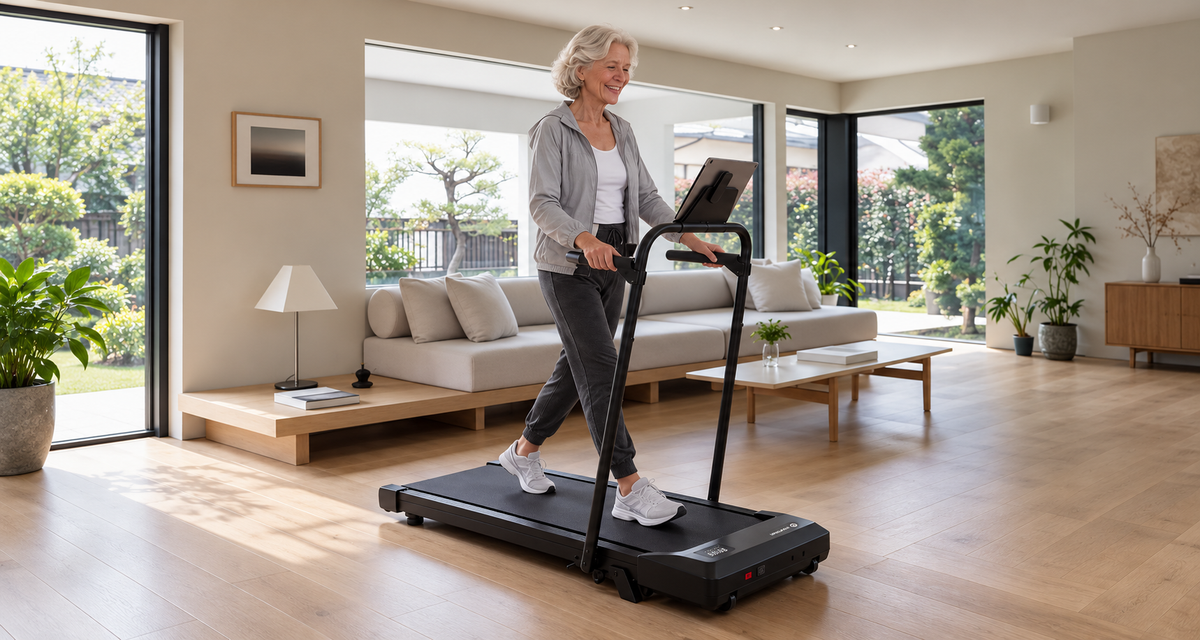
If your main goal is to build a consistent daily walking habit, the DeerRun Q2 Urban supports speeds from 1–6 km/h, covering everything from easy walking to brisk walking around 4.8 km/h.
Once you are comfortable with flat walking, the DeerRun Q2 Urban also offers a 7% manual incline, giving you another way to add workout variety without relying only on increasing speed.
You do not need to make every Walking Pad workout longer to make progress.
5. Change Five: Sleep and Mental Well-Being Are Worth Tracking Too
Some of the changes associated with regular walking will never appear on a set of bathroom scales.
A 2026 systematic review and meta-analysis published in Frontiers in Public Health included 21 randomised controlled trials and 1,707 participants.
The combined results suggested that walking was associated with improvements in subjective sleep quality among adults. However, the researchers rated the certainty of the current evidence as very low, so these results should be interpreted cautiously.
A 2024 systematic review and meta-analysis published in JMIR Public Health and Surveillance included 75 randomised controlled trials involving 8,636 participants.
Among adults, walking interventions were associated with reductions in depressive and anxiety symptoms compared with inactive control groups. However, walking did not show a clear advantage over other active forms of exercise.
For that reason, it can be useful to track your sleep quality, daytime energy and overall mood across several weeks rather than using one particularly good or bad day to decide whether walking is “working”.
6. How Can You Fit 30 Minutes of Walking Into Your Day?
You do not need to complete all 30 minutes of walking in one continuous session.
If your schedule is fragmented, you can use:
10 Minutes + 10 Minutes + 10 Minutes
If you have a longer uninterrupted break, complete:
20–30 Minutes of Continuous Walking
Once flat walking feels relatively easy, you can slightly increase your speed or add short periods of incline walking to some sessions.
There is no need to increase your workout duration every day.
Using the American College of Sports Medicine walking metabolic equation as an estimate, walking at 4.8 km/h (3 MPH) on a 0% incline is approximately 3.3 METs, which falls within the moderate-intensity activity range.
Looking at the week as a whole, the Physical Activity Guidelines for Americans recommend that adults accumulate 150–300 minutes of moderate-intensity aerobic activity per week, along with muscle-strengthening activity on at least two days.
Walking can be an important part of your weekly exercise routine, but it does not need to do every job in your training programme.

7. Look Beyond the Scale: Track These 5 Changes for 4 Weeks
If you have started walking regularly, try tracking the following indicators for four consecutive weeks:
| What to Track | What to Record |
|---|---|
| Total Walking Time | How many minutes you walk each week |
| Daily Step Count | Whether your overall daily activity is changing |
| How a Consistent 30-Minute Walk Feels | Whether the same speed feels easier over time |
| Exercise Heart Rate | Long-term trends under similar walking conditions |
| Sleep and Energy Levels | Overall patterns across several weeks |
If you already need to monitor your blood pressure, you can also record its longer-term trend according to your healthcare professional's recommendations.
After four weeks, look back and ask yourself:
- Is the same 30-minute walk easier than before?
- Has your weekly walking time increased?
- Has your daily activity increased?
- Are you spending less time sitting?
- Have you noticed any consistent changes in sleep or energy?
Taken together, these changes can tell you more about the benefits of a consistent walking routine than one number on the scales on one particular morning.
Conclusion | No Weight Change Doesn’t Mean Your 30-Minute Walk Was Pointless
Walking for 30 minutes every day does not guarantee that everyone will experience the same changes within a few weeks.
But changes in cardiorespiratory fitness, blood pressure, post-meal blood sugar response, sleep and everyday physical activity can all help you understand how your body is responding to regular walking.
Give yourself four weeks to follow a simple and consistent walking routine. Then look back and ask:
Does the same 30-minute walk feel easier than it did during Week 1?
If your current goal is to establish a regular Walking Pad routine, the DeerRun Q2 Urban supports speeds from 1–6 km/h, making it suitable for gradually progressing from easy walking to a brisker pace.
Once you have adapted to flat walking, its 7% manual incline gives you another way to add variation to your Walking Pad workouts.
You do not need to make every workout longer or faster. Start by making those 30 minutes a consistent part of your day.
Give Your Walking Routine Four Weeks
Instead of judging every walk by the number on the scales, build a consistent 30-minute walking habit and track how your fitness, activity and everyday routine change over time.
Explore DeerRun Q2 Urban →


Leave a comment
All comments are moderated before being published.
This site is protected by hCaptcha and the hCaptcha Privacy Policy and Terms of Service apply.