








Word Count: Approx. 1,300 words | Reading Time: About 6 minutes
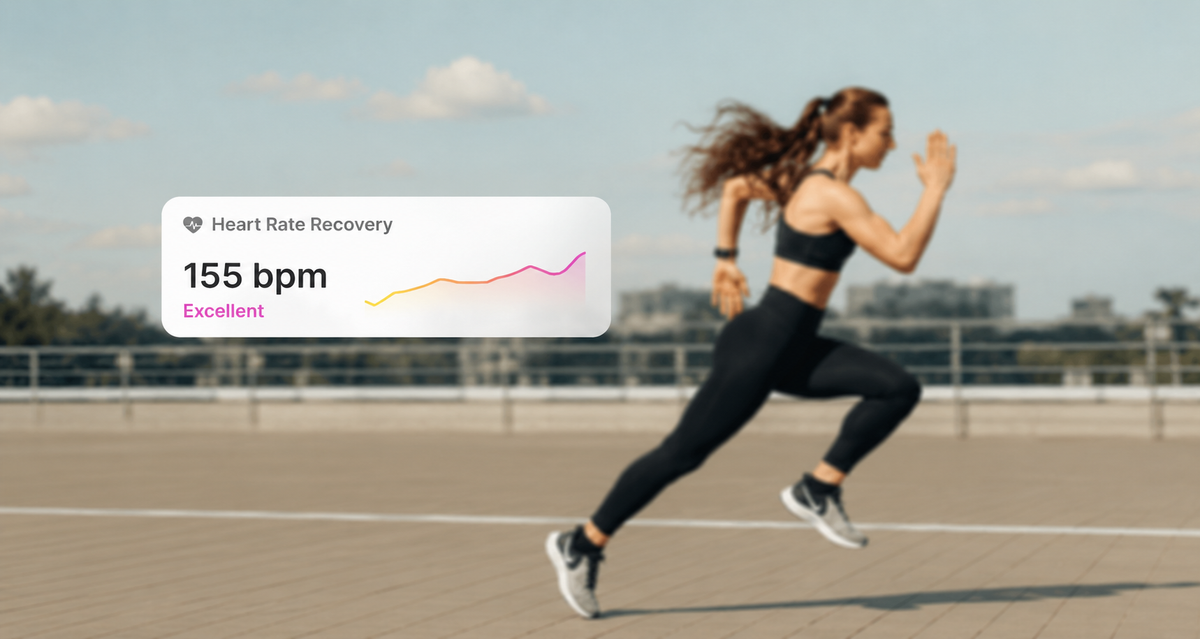
You are running at your usual treadmill speed, but your smartwatch shows your heart rate rising from 140 to 150, then 160 bpm. Does 160 bpm mean you are running too fast? Should you slow down?
There is no single normal heart rate while running that applies to everyone. Age, fitness level, running speed, incline and how you feel on a particular day can all affect your heart rate.
The same 160 bpm while running can mean very different things for different people.
Instead of focusing on one heart-rate number, look at your heart rate, breathing and perceived effort together.
1. A Higher Running Heart Rate Doesn’t Automatically Mean a Better Workout
Your running heart rate will usually increase as you raise your speed or treadmill incline. But a higher heart rate does not automatically mean a more effective workout.
For example, two people running at approximately 8 km/h (5 MPH) may experience completely different levels of effort.
One runner may still be able to have a comfortable conversation, while another may already be breathing heavily.
The same treadmill speed does not necessarily mean the same training intensity for everyone.
If today's plan is a 30-minute easy run, maintaining steady breathing and completing the workout comfortably may already be enough.
Constantly increasing your speed simply to push your heart rate higher could turn an easy run into a much harder workout.
Before deciding how high your heart rate “should” be, start with a more useful question:
What is the purpose of today’s run?
An easy run, recovery session and higher-intensity running workout should not all feel the same.
2. Is 160 BPM Too High While Running?
You cannot decide that from 160 bpm alone.
The American Heart Association provides general target heart rate reference ranges that vary with age:
| Age | Approx. Target Heart Rate Range |
|---|---|
| 20 years | 100–170 bpm |
| 40 years | 90–153 bpm |
| 60 years | 80–136 bpm |
These are general reference ranges rather than strict individual limits. The AHA notes that the figures are averages and should be used as a guide.
When your smartwatch shows 160 bpm while running, consider three things together:
- Age and fitness level: the same heart rate can mean different things for different people.
- Current workout intensity: are you walking, doing an easy jog or completing a more demanding running session?
- How your body feels: is your breathing controlled, can you speak normally, and are you experiencing any unusual discomfort?
The heart rate zones shown on a smartwatch can provide another reference, but you do not need to speed up simply to reach a particular Zone 1–5 number.
A 2024 umbrella review published in Sports Medicine found that consumer wearables can provide useful heart-rate measurements, but accuracy varies depending on the device, exercise intensity, activity type and user characteristics.
Instead of asking whether one reading of 160 bpm is automatically “too high”, compare how your heart rate and perceived effort change under similar workout conditions.

3. Why Does Your Heart Rate Keep Rising Even When Your Speed Stays the Same?
Yesterday, you ran at approximately 8 km/h (5 MPH) for 20 minutes and your heart rate stayed around 140 bpm.
Today, you are running at the same speed, but after 15 minutes your heart rate is already approaching 155 bpm.
Several things may have changed:
- Sleep and fatigue: you may not have recovered as well, or the previous day's training may have left you more tired.
- Temperature and hydration: hotter conditions and hydration status can affect how your body responds to exercise.
- Treadmill incline: running at 8 km/h on a flat treadmill is not the same workload as running at the same speed on an incline.
- Workout duration: even when speed remains constant, heart rate may gradually increase during sustained exercise.
When comparing two treadmill running workouts, record your speed, incline, duration and perceived effort together.
Running at the same speed does not necessarily mean your body is working at exactly the same intensity.
4. Should You Slow Down if Your Running Heart Rate Keeps Increasing?
Rather than reacting immediately to the number on your watch, look at how your body is responding.
| How You Feel While Running | What to Do |
|---|---|
| Heart rate rises gradually, breathing remains steady and you can still talk normally | Maintain your pace and continue monitoring how you feel |
| Breathing becomes noticeably faster and full sentences become difficult | Reduce your speed or incline |
| You still feel unusually fatigued after slowing down | Switch to easy walking or end the workout |
| Chest pain, significant dizziness, feeling faint or unusual difficulty breathing | Stop exercising and seek medical help promptly if symptoms are severe or persistent |
For example, if you planned to run at 8 km/h (5 MPH) for 30 minutes but already feel noticeably exhausted by minute 12, it is reasonable to reduce your speed.
Your planned running speed is a guideline—not something you need to complete at all costs.
5. Don’t Want to Keep Checking Your Watch? Try the Talk Test
If constantly checking your smartwatch makes the workout more confusing, the Talk Test provides a simple way to estimate running intensity.
According to the Centers for Disease Control and Prevention:
- During moderate-intensity exercise, you can generally talk but cannot sing comfortably.
- During vigorous-intensity exercise, you may only be able to say a few words before pausing for breath.
You can also use RPE, or Rating of Perceived Exertion, to describe how hard the workout feels on a scale from 0 to 10.
If today's plan is an easy run but you are already breathing heavily and struggling to speak in full sentences, there is no need to keep increasing the speed simply because your watch shows a particular heart-rate zone.
Your smartwatch gives you data. Your breathing, talk test and perceived effort help you decide what that data means during today's workout.
6. Use a 30-Minute Treadmill Workout to Understand Your Own Running Heart Rate
During your next 30-minute treadmill workout, observe how your heart rate and perceived effort respond to different speeds rather than trying to reach the highest possible heart rate.
6.1 0–5 Minutes | Walking Warm-Up
4.0–4.8 km/h (2.5–3.0 MPH)
Start with comfortable walking and allow your breathing and movement to settle gradually.
6.2 5–20 Minutes | Easy Running
Choose an easy jogging pace that allows you to speak naturally.
If continuous running feels too demanding, alternate between walking and jogging rather than forcing yourself to keep running.
6.3 20–25 Minutes | Slightly Increase the Intensity
If you still feel comfortable, increase your speed slightly.
If your breathing is already noticeably faster or you feel tired, stay at the current pace or slow down instead.
6.4 25–30 Minutes | Walking Cooldown
Return to a comfortable walking speed and allow your breathing to gradually settle.
If you mainly train at home, the DeerRun A1 Pro supports a 1–16 km/h speed range and up to a 6% manual incline.
This allows you to adjust the same workout between walking, jogging and running depending on how you feel that day.
After finishing, record:
- Running speed
- Heart rate
- Incline
- Perceived effort
Observing these measurements across several workouts can tell you more about your personal running intensity than remembering the highest heart-rate number from one run.

Don’t Let One Heart-Rate Number Define Every Run
160 bpm does not automatically mean you are running too fast. And a reading of 140 bpm does not automatically mean the workout intensity is right for you.
The next time you notice your running heart rate changing, look at your current speed and incline first. Then pay attention to your breathing, your ability to talk and how hard the workout feels.
Your heart rate is not a scorecard for your run. It is one tool that can help you understand how demanding today's pace feels for your body.
Find the Running Pace That Works for You
Use the DeerRun A1 Pro to move from easy walking to everyday running and adjust your speed according to how you feel each day.
Explore DeerRun A1 Pro →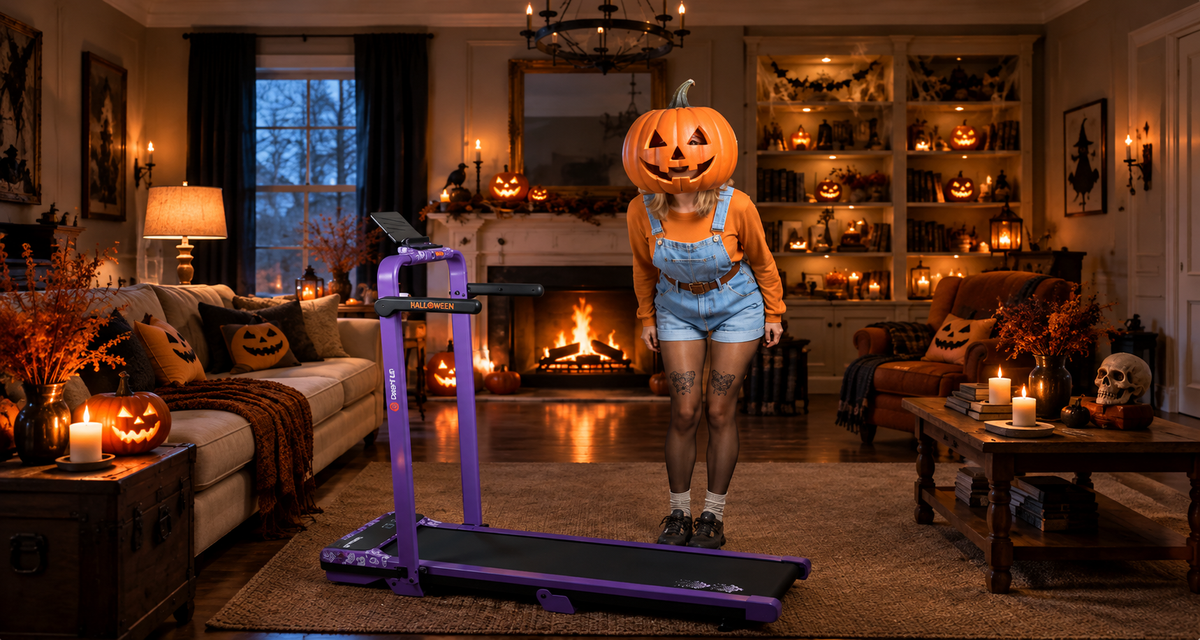


Leave a comment
All comments are moderated before being published.
This site is protected by hCaptcha and the hCaptcha Privacy Policy and Terms of Service apply.