








Word Count: Approx. 1,300 words | Reading Time: About 6 minutes
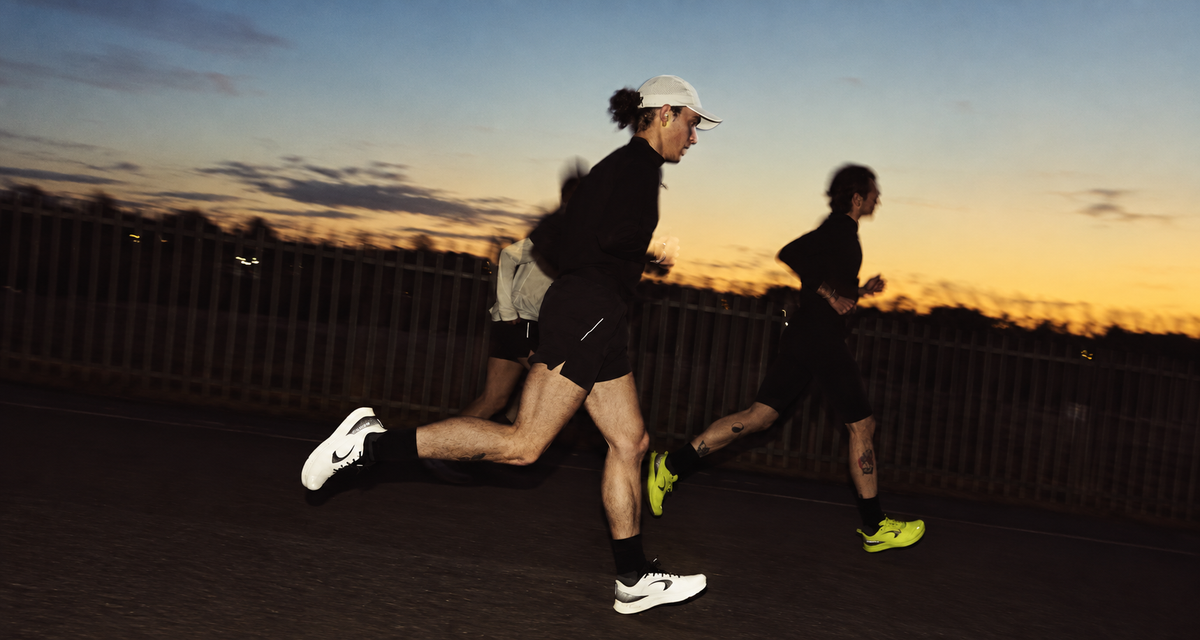
If nighttime is the only time you can exercise but you find yourself unable to fall asleep afterwards, do not immediately assume the problem is simply that you are working out too late.
It is more useful to check how close your workout ends to bedtime, how intense the session is, when you consume caffeine, and whether you leave enough time after training for your body to gradually settle down.
Try adjusting things in this order:
Workout End Time → Training Intensity → Caffeine → Cooldown and Relaxation
In 2019, a systematic review and meta-analysis published in Sports Medicine included 23 studies. Overall, the findings did not support the idea that evening exercise generally disrupts sleep.
However, vigorous exercise ending approximately one hour before bedtime may affect sleep onset, total sleep time and sleep efficiency. The researchers also noted that some moderating effects were no longer significant after individual studies were excluded, so the “one hour before bedtime” window is better treated as a period that may require extra caution rather than a universal rule for everyone.
1. Exercising at Night Doesn’t Necessarily Mean You’ll Sleep Poorly
For people who can only train in the evening, the main question is not simply, “Can I exercise at night?”
What matters more is:
- What time does your workout end?
- How intense is the workout?
- How much time is left before you go to bed?
- Do you actually give yourself time to slow down afterwards?
A workout that starts at 7 p.m. when you do not go to bed until midnight obviously should not be treated the same as one that ends at 10:30 p.m. when you plan to sleep at 11.
So if you cannot change the time of day you exercise, start by adjusting what you do and how you finish the workout instead of simply cancelling your evening exercise.
2. Feel Wide Awake After Your Workout? Check When It Ends
Finishing your workout does not mean your body immediately switches into rest mode.
After running, interval training or incline exercise, your breathing, heart rate and body temperature all need time to gradually come down.
If you finish your final set and immediately get into bed, you may experience that familiar feeling of:
“My body is tired, but I’m still wide awake.”
The same Sports Medicine review found that a higher body temperature at bedtime was associated with lower sleep efficiency and more wakefulness during the night, although the authors also noted uncertainty around these moderator findings.
After training, you can watch for a few simple signs:
- Has your breathing returned to a steadier rhythm?
- Has heavy sweating started to decrease?
- Is your heart rate gradually slowing down?
- Does your body feel as though it is beginning to shift from an alert state into a calmer one?
Rather than rigidly following a rule such as “you must wait one hour”, it is more practical to make sure there is some transition between finishing your workout and getting into bed.

3. The Closer You Are to Bedtime, the More Room You Should Leave in Your Training Intensity
In 2021, a systematic review and meta-analysis published in Sleep Medicine Reviews included 15 studies of evening high-intensity exercise involving 194 participants.
The findings showed that, for healthy young and middle-aged adults, acute high-intensity exercise completed 2–4 hours before bedtime did not appear to significantly disrupt nighttime sleep overall. One of the main changes observed was a slight reduction in the proportion of rapid eye movement (REM) sleep.
So if you still have several hours before bedtime, you may be able to complete a normal workout.
If it is already late, however, it may make more sense to replace sprints, high-intensity intervals or steep incline training with steady walking, easy jogging or lower-intensity activity.
Working out harder at night does not necessarily mean you will fall asleep more easily. Training intensity should be considered together with how much time you have left before bed.
4. Can’t Sleep? Don’t Focus Only on Your Workout Time
If your workout does not end particularly late and the intensity is not especially high, caffeine timing is another factor worth checking.
A randomised controlled study published in the Journal of Clinical Sleep Medicine asked participants to consume 400 mg of caffeine either 0, 3 or 6 hours before their usual bedtime.
Compared with placebo, the study found that even when this dose was consumed six hours before bedtime, it significantly disrupted sleep.
It is important to note that 400 mg is a relatively high dose, so this should not be interpreted as meaning that everyone must completely avoid caffeine within six hours of bedtime.
A more useful approach, if you regularly struggle to sleep after evening workouts, is to keep a simple record for a few days:
Time of Your Last Caffeine Intake + Workout End Time + Approximate Time It Took You to Fall Asleep
That makes it easier to identify where the problem may actually be coming from.
5. You Can Eat After an Evening Workout—Just Don’t Squeeze a Large Meal Too Close to Bedtime
If you are hungry after an evening workout, you do not need to avoid eating completely simply because you are going to sleep later.
You can rehydrate normally and eat based on what you have already had throughout the day.
However, if you eat a very large meal immediately after training and then go to bed shortly afterwards, feeling overly full or experiencing digestive discomfort may make it harder to relax.
If bedtime is already close, you can keep your post-workout food relatively simple instead of squeezing all three of these into a very short period:
High-Intensity Workout → Large Meal → Straight to Bed
The point is not that “you cannot eat at night”. It is to pay attention to whether you actually feel comfortable after eating.
6. Give Yourself 20–30 Minutes to Truly Slow Down
After an evening workout, you can use a simple transition routine:
| Time | What to Do |
|---|---|
| 0–5 minutes | Gradually slow down and let your breathing recover. |
| 5–10 minutes | Rehydrate and get yourself organised. |
| 10–20 minutes | Shower and change clothes. |
| After 20 minutes | Move into your normal bedtime routine. |
This is not meant to be a strict countdown.
What matters is preserving the sequence:
Finish Training → Slow Down → Relax → Prepare for Sleep
7. If You’re Training Late, Keep Your 30-Minute Workout Steadier
If it is already relatively late, you can keep the intensity of your workout more controlled.
When using the DeerRun Q2 Urban, you could structure a 30-minute session like this:
| Time | Speed | Focus |
|---|---|---|
| 0–5 min | 3.2–4.0 km/h | Easy warm-up |
| 5–20 min | 4.0–5.6 km/h | Steady walking |
| 20–25 min | 3.2–4.0 km/h | Gradually slow down |
| 25–30 min | 2.4–3.2 km/h | Easy finish |
The DeerRun Q2 Urban supports a 1–6 km/h speed range, making it well suited to this kind of steady, walking-focused evening activity.
If you still have plenty of time before bed, you can schedule a more complete workout. If it is already late, make sure the final few minutes are genuinely reserved for winding down.
If You Can’t Move Your Workout to the Morning, Make Your Evening Routine Work Better
Exercising at night does not automatically mean you will sleep poorly.
If moving your workout to the morning is not realistic, start by checking:
What Time You Finish → How Hard You Train → When You Have Caffeine → Whether You Actually Slow Down Afterwards
You do not need to give up evening exercise simply because you are worried about sleep, and you do not need to exhaust yourself every time you work out.
Remember one thing:
If you can’t change when you train, start by changing how you finish your workout.

Make Evening Exercise Easier to Fit Into Your Routine
Fit exercise into a rhythm that works for you—and give your body enough time to gradually transition back into a resting state.
Explore DeerRun Q2 Urban →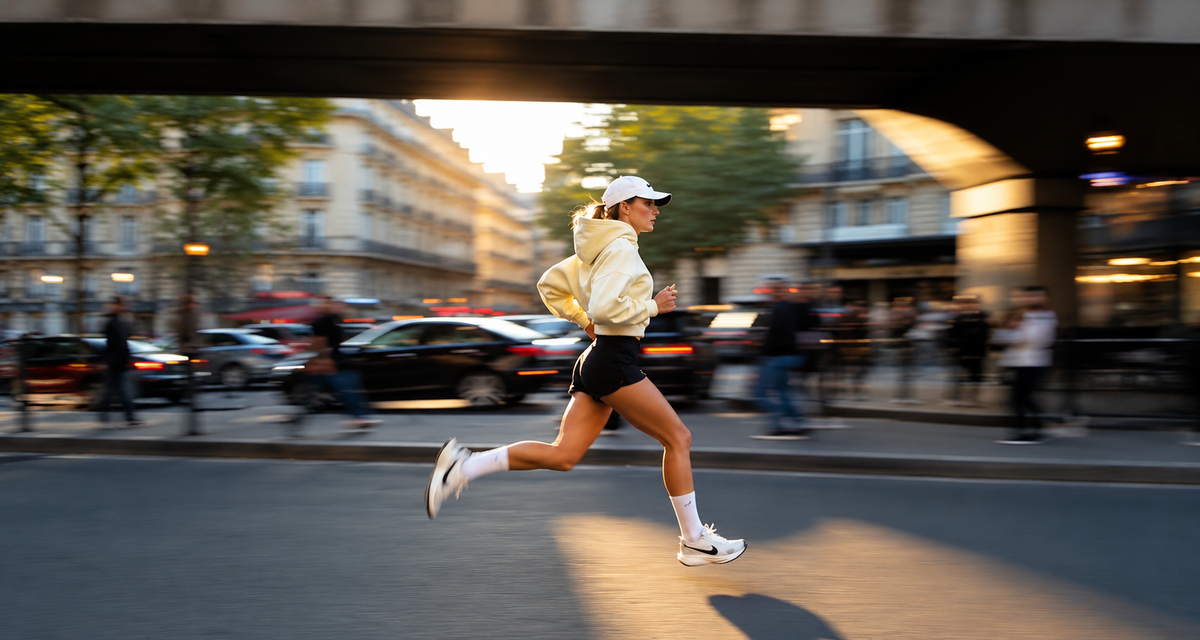


Leave a comment
All comments are moderated before being published.
This site is protected by hCaptcha and the hCaptcha Privacy Policy and Terms of Service apply.