









Word Count: Approx. 1,250 words | Reading Time: About 6 minutes
After a run, many people wonder about the same thing: can you shower straight after running?
In fact, you do not need to wait a fixed 30 minutes or one hour after a run. A more practical way to decide is to walk slowly for a few minutes, rehydrate, and wait until your breathing and heart rate gradually settle and heavy sweating starts to ease before taking a shower.
For an ordinary everyday workout, comfortably warm water is usually enough. There is no need to deliberately make the water extremely cold or hot.
What really matters is not how long you have waited, but whether your body has gradually settled after exercise.
1. Can You Shower Right After a Run?
1.1 Your Run Has Stopped, but Your Body Has Not Fully Slowed Down Yet
Right after a run, it is better not to head straight into the shower. First, allow the intensity of your exercise to come down gradually.
Even after you press the stop button and your legs stop running, your body does not immediately return to its pre-exercise state.
The American Heart Association notes that after physical activity, your heart is still beating faster than usual and your body temperature remains elevated. Stopping too suddenly may also leave you feeling light-headed as your heart rate and blood pressure fall quickly.
So after finishing your run, walk slowly for a few minutes and allow your breathing, heart rate and overall physical state to settle gradually before moving on to the shower.

1.2 You Do Not Need to Follow a Strict “30-Minute or 1-Hour” Rule
Your body will not be in the same state after a 20-minute easy walk as it is after a 60-minute run, so there is no reason to use exactly the same waiting time for both.
To decide whether you are ready to shower, look for three signs:
You have completed a slow walking cooldown, your breathing and heart rate have noticeably settled, and heavy sweating has started to ease.
Once these have improved, there is no need to keep waiting simply to reach 30 minutes or one hour.
2. Before You Shower After a Run, Complete These 3 Steps
Step 1 | Slow Down and Cool Down: Allow 3–10 Minutes
The American Heart Association recommends gradually reducing your activity level after exercise so that your heart rate and breathing can come down progressively.
In practice, you can arrange your post-run cooldown like this:
| Workout You Have Just Completed | What to Do Afterwards |
|---|---|
| 20–30 minutes of easy walking | About 3–5 minutes of easy, slow walking |
| 40–60 minutes of running or incline training | About 5–10 minutes of gradually slowing down |
If you are training on a treadmill, gradually reduce your speed during the final few minutes. Finish with some easy walking at around 2.4–4.0 km/h rather than running until the final minute and stopping immediately.
The DeerRun A1 Pro, for example, reaches speeds of up to 16 km/h and provides a 6% manual incline, allowing you to move from everyday walking to running and incline training. Whatever the intensity of that day's workout, you can reserve the final few minutes for slowing down and make recovery part of the complete training session.
Step 2 | Rehydrate: Drink Some Water Before You Shower
If you have just completed a longer run or incline workout, or if the weather is hot and you have been sweating heavily, drink some water before getting ready to shower.
When your clothes are soaked with sweat, it is easy to think only about washing it off as quickly as possible. But before showering, it is more important to start replacing the fluid and electrolytes you have lost.
Step 3 | Shower Once Your Body Has Gradually Settled
After finishing your slow walking cooldown and rehydrating, check how your body feels.
If your breathing is no longer as heavy as it was immediately after your run, your heart rate is gradually coming down and heavy sweating has started to ease, you can get ready to shower.
The useful rule is not “wait 30 minutes”. Slow down first, rehydrate, then shower once your body has settled.
3. Cold or Hot Shower: Which Should You Choose After Running?
3.1 Cold Water Does Not Automatically Mean Better Recovery
It is common to see athletes using ice baths after training, but a cold shower after running and cold-water immersion are not the same thing.
A systematic review published in Sports Medicine found that cold-water immersion after high-intensity exercise may help with muscle soreness 24 hours later, perceived recovery and some measures of exercise performance. However, the results were not consistent across every outcome.
That does not mean taking a cold shower immediately after every run will automatically make you recover faster.
3.2 Hot Water Is Not the Default Choice Either
Immediately after running, your body is already relatively warm. If you are still sweating heavily, there is no need to deliberately turn the water temperature up simply to “keep sweating”.
For ordinary daily exercise, the main purpose of showering is cleanliness and comfort. You do not need to turn it into another recovery workout.
3.3 Comfortable Warm Water Is Simpler After Everyday Workouts
If you have simply completed an everyday walk or run, there is no need to copy an athlete's ice-bath routine every time.
Choose a comfortably warm water temperature. More important than whether the shower is cold or hot is whether you have cooled down, rehydrated and allowed your body to settle gradually.
4. How Long Should You Wait to Shower After Running? Check These 3 Signs
The next time you finish a run, you do not need to look at the clock first. Check these three things instead:
-
Have you completed a slow walking cooldown?
Take a few minutes to gradually bring down the intensity. -
Have your breathing and heart rate noticeably settled?
You are no longer breathing as heavily as you were immediately after finishing your run. -
Has the heavy sweating started to ease?
You may still be sweating a little, but you are no longer continuously sweating heavily as you were when you first stopped.
Once all three have noticeably improved, there is no need to keep waiting simply to reach a specific number of minutes.
When deciding when to shower after running, checking how well your body has settled is more practical than simply watching the clock.

After-Run Shower Routine: Slow Down → Rehydrate → Check Your Recovery → Shower
After exercise, you do not need to take out your phone and start a timer, waiting until exactly 30 minutes have passed before you feel able to shower.
A more practical order is:
Slow Down → Rehydrate → Check Your Recovery → Shower
If you have completed your cooldown, your breathing and heart rate have gradually settled and heavy sweating has started to ease, you can get ready to shower.
For ordinary everyday workouts, there is no need to go to extremes with either cold or hot water. Comfortable warm water is enough.
What you really need to judge is not how long you have waited, but whether your body has gradually settled after exercise.
Give Every Run a Proper Finish
Complete your workout with the DeerRun A1 Pro + PitPat AI Coach, and remember to leave the final few minutes for recovery.
Explore DeerRun A1 Pro →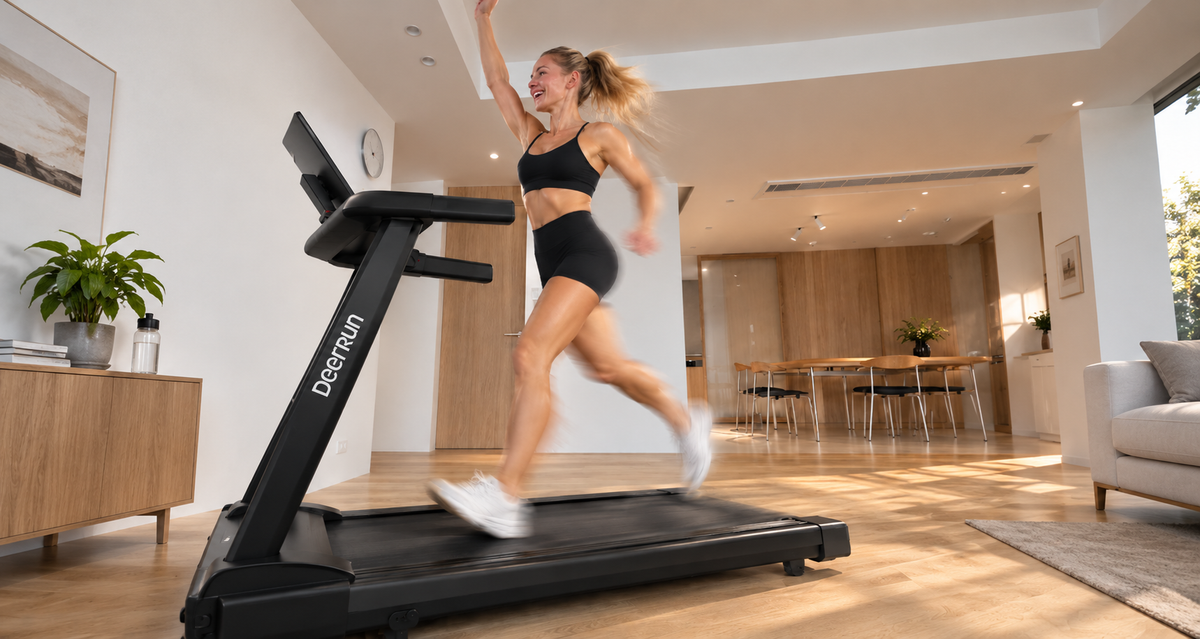


Leave a comment
All comments are moderated before being published.
This site is protected by hCaptcha and the hCaptcha Privacy Policy and Terms of Service apply.