







Word Count: Approx. 1,300 words | Reading Time: About 6 minutes
If you do more than one type of running workout throughout the week, maximum treadmill speed is not the only number worth looking at when buying a treadmill.
Monday might be an Easy Run. On Wednesday, you may want to add some pace changes. Friday might be a short recovery session, while the weekend could include a more complete running workout.
In that situation, the real question is not:
“How fast can this treadmill go?”
It is:
“Can it handle the different workouts I do throughout the week?”
A treadmill that runners can use over the long term should support Easy Runs, pace changes, Recovery Runs and moderate incline training—not simply perform well at one particular speed.
For runners, the standard for choosing a home treadmill should not be how impressive one maximum-speed number looks. What matters is whether the same speed range can support the different training days throughout your week.
1. Easy Runs Are About Stability, Not Maximum Speed
An Easy Run usually is not the fastest workout of the week. Most of the time, it may simply be a 20–30 minute run—but it is often one of the easiest sessions to maintain consistently over the long term.
For this type of workout, what matters more is:
- Speed that is easy to control
- A stable running rhythm
- The ability to run continuously for 20–30 minutes without repeatedly interrupting your pace
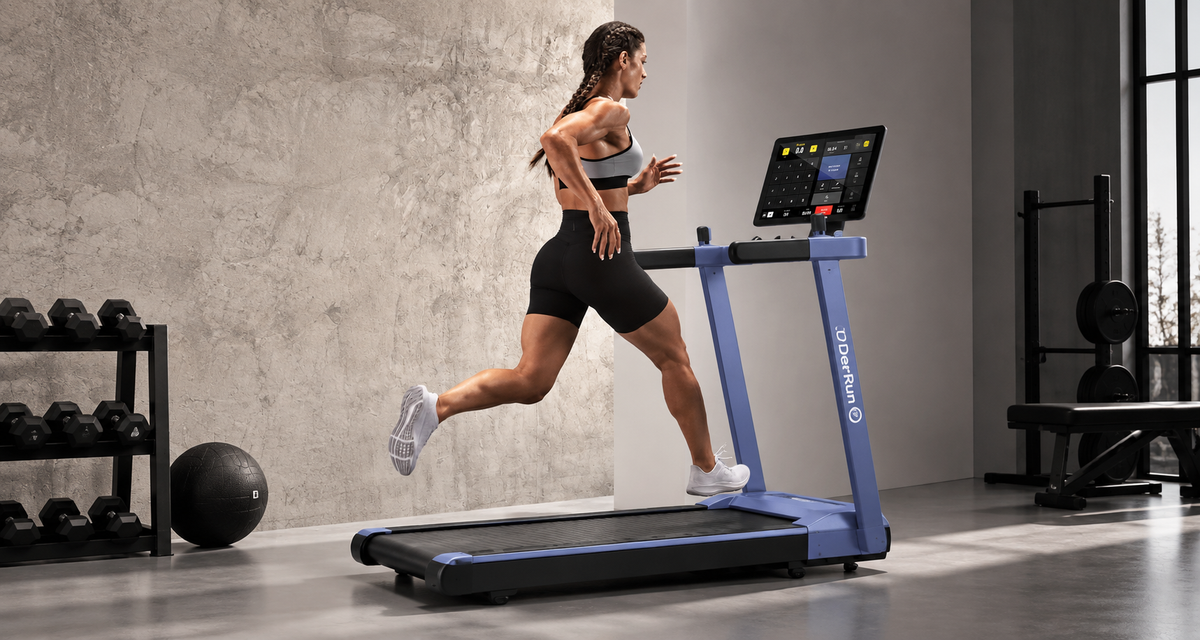
The DeerRun A1 Pro reaches a maximum speed of 16 km/h, roughly equivalent to a pace of 6:02 min/mile, leaving plenty of room to adjust between an easy jog and a faster running pace.
For example, if you only want to run for 20 minutes on Monday, you can simply maintain a speed that feels natural and controllable. You do not need to keep increasing the pace simply to make the workout feel “effective”.
What an Easy Run really needs is the ability to finish steadily—not a higher number on the screen.

2. Tempo Runs Need Room to Adjust Your Speed
By the middle of the week, some workouts may include a slightly faster pace—for example, a 20–25 minute Wednesday session.
At that point, your treadmill's speed range needs to do more than just cover your usual Easy Run pace.
For example, a 20-minute workout could look like this:
Easy Run → Faster Pace → Back to Easy Pace → Another Short Faster Effort
The DeerRun A1 Pro, with a maximum speed of 16 km/h, leaves room for these kinds of pace changes.
What really matters is not simply “how high the maximum speed goes”. The better question is:
When you want to change your training pace, does the treadmill still give you room to adjust?
| Stage of the Workout | Reference Pace | Treadmill Speed Needed |
|---|---|---|
| Easy Run / Recovery Segment | Approx. 7:27–6:13 min/km (12:00–10:00 min/mile) | Approx. 8.0–9.7 km/h |
| Faster Pace | Approx. 6:13–5:17 min/km (10:00–8:30 min/mile) | Approx. 9.7–11.4 km/h |
| Short Faster Effort | Approx. 4:58 min/km (8:00 min/mile) or faster | Approx. 12.1 km/h or higher |
3. Don’t Want to Keep Running Faster? Incline Can Add Training Variety Too
If the only way you increase difficulty throughout the week is by running faster, your training can quickly become repetitive—and eventually, speed itself reaches the treadmill's maximum.
Incline gives you another way to vary your workouts.
The DeerRun A1 Pro supports up to a 6% manual incline, allowing you to introduce gentle elevation changes into selected sessions.
For example, during a 20-minute run, you could keep most of the workout relatively flat, add a few minutes of incline in the middle, and then return to your original pace.
The goal is not to chase the maximum incline. It is to give different training days different purposes.
Incline is a training tool, not a score you need to maximise.
If you are not feeling your best that day, it is completely fine to stay at a lower incline and run at an easier pace.

4. Different Training Days Should Still Connect Into One Weekly Record
If every run exists as a separate workout, it is easy to remember that “I ran today” without having a clear picture of what you actually accomplished across the whole week.
Did you complete three weekday sessions, or only one?
That is where PitPat AI Coach can help connect different training days into the same weekly rhythm.
You might complete an Easy Run on Monday, add some pace changes on Wednesday, and do only a short Recovery Run on Friday. Each of those sessions can still be recorded.
When you look back at the week, it becomes easier to see:
- Which workouts you have completed
- Which sessions were easier
- When you introduced speed or incline changes
DeerRun A1 Pro helps you complete different types of workouts. PitPat helps keep your weekly training connected.
5. Give Different Days of the Week Different Training Jobs
If you want to run several times a week, you do not need to make every session high intensity.
You can start with a simple structure of three weekday runs plus one weekend session:
| Day | Workout | Focus |
|---|---|---|
| Monday | 20–30 min Easy Run | Keep it easy and steady |
| Wednesday | 20–25 min Pace-Change Run | Add a few faster segments |
| Friday | 15–20 min Recovery Run | Reduce the intensity and keep moving |
| Weekend | 30–40 min Free Run | Add time or incline variation depending on how you feel |
The point of this structure is not to prescribe exactly how much you must do every day. It is to give different workouts different purposes.
You do not need to run fast on Monday. Wednesday does not need to be long. And on Friday, you do not need to prove how good your fitness is.
If you are not feeling your best, reduce the speed. If you are short on time, shorten the workout.
What matters more across a training week is having a rhythm—not making every workout harder.
6. DeerRun A1 Pro: Better Suited to Runners Who Do Different Types of Workouts Throughout the Week
The DeerRun A1 Pro is better suited to runners who include several types of running workout in their week but do not necessarily train at high intensity every day.
What these runners really need is not a treadmill that only stands out during high-speed workouts. They need one that can flexibly move between easy running, faster efforts and recovery sessions.
The DeerRun A1 Pro can support this kind of multi-scenario training: stay steady during everyday runs, adjust speed or incline when you want more challenge, fit in a short run when time is limited, or lower the intensity and keep training when you are not feeling at your best.
To decide whether it fits your training, ask yourself three questions:
- Do you do more than one type of running workout each week?
- Are most of your individual workouts around 20–30 minutes?
- Do you want your different training days to be continuously recorded and easy to review?
If your answers are mostly “yes”, the DeerRun A1 Pro is more like a treadmill designed to support an entire training cycle—not simply a machine that meets the speed requirement of one particular workout.
Conclusion | Buy for Your Whole Week, Not Just One Workout
When buying a treadmill, it is easy to be drawn to a single maximum-speed or incline number.
But what really determines whether you will keep using it is much simpler:
Can it work for you across the different training days in your week?
Monday, you want to take it easy—it works.
Wednesday, you want to change the pace—it still works.
Friday, you only want a short recovery session—it works then too.
The right treadmill for a runner is not one that performs especially well on one particular day. It is one that can support your training throughout the entire week.
Let One Treadmill Support Your Entire Week of Training
Use the DeerRun A1 Pro + PitPat AI Coach to support different running paces and keep every workout connected to the same training plan.
Explore DeerRun A1 Pro →



Leave a comment
All comments are moderated before being published.
This site is protected by hCaptcha and the hCaptcha Privacy Policy and Terms of Service apply.