









Word Count: Approx. 1,200 words | Reading Time: About 5 minutes
Halfway through a run, you suddenly feel pain in the side of your abdomen. The faster your breathing becomes, the more noticeable the pain feels. For many runners, the first thought is: Am I breathing the wrong way?
Not necessarily. What runners commonly call a “side stitch” is medically known as Exercise-Related Transient Abdominal Pain (ETAP). It is relatively common in activities such as running that involve repetitive movement of the torso, but its exact cause is still not fully understood. Running intensity, food intake, fluid consumption and the type of exercise may all play a role.
So the next time you get a side stitch, do not focus only on changing the way you breathe. A more practical order is:
Slow Down → Adjust Your Breathing → Check Your Pre-Run Food Intake → Track Your Triggers
1. Is a Side Stitch Just Caused by the Wrong Breathing Technique?
Your breathing rhythm may affect how comfortable you feel while running, but there is not enough evidence to show that one particular “wrong” breathing pattern is the sole cause of side stitches.
A review published in Sports Medicine explains that several possible mechanisms have been proposed for ETAP, including irritation of the parietal peritoneum and tension on structures supporting the abdominal organs. However, the exact mechanism remains unclear.
Instead of focusing only on whether you should “inhale for two steps and exhale for two steps”, first check:
- Did you start running too fast?
- Did you eat recently or drink a large amount before running?
- Did you increase both speed and incline at the same time?
- Does the side stitch tend to appear at a similar point in your workouts?
Finding your triggers is more practical than searching for one universal breathing technique.
2. When a Side Stitch Starts, Slow Down First
Once the pain begins, do not try to force yourself to maintain the same speed.
A typical side stitch often begins to ease when exercise intensity is reduced or the activity is stopped. For example, if you were running at around 8.0 km/h, reduce your speed to approximately 5.6–6.4 km/h first. If you are still uncomfortable, slow down further to a brisk walk.
Maintain the lower intensity for a minute or two and see whether the discomfort begins to ease.
Once your speed comes down, it also becomes easier to stabilise your breathing and movement.
Get your rhythm back first, then decide whether to continue running.

3. If Your Breathing Becomes Fast and Shallow, Slow Down Your Exhale
After reducing your speed, focus on your breathing.
If your breathing has become rapid and shallow, you can try:
Inhale for 2–3 steps → Exhale for 2–3 steps
You can also find a rhythm that feels more natural based on your own cadence. There is no need to force yourself to follow a strict number of steps.
The goal is to gradually make your breathing feel fuller and more controlled—not to keep increasing your speed while your breathing becomes increasingly irregular.
There is not enough evidence to show that one particular breathing pattern can directly “cure” a side stitch, so it is more useful to think of breathing adjustments as a way to help restore your rhythm.
4. If You Often Get Side Stitches After Eating, Check Your Meal Timing
If side stitches regularly occur soon after eating, your pre-run food intake is worth checking first.
The Sports Medicine review of ETAP notes that the condition may be aggravated by exercising after eating, while consuming large amounts of food or fluid—particularly more concentrated drinks—may also make it more likely to occur.
A treadmill study examining fluid composition and ETAP also found that a more concentrated fruit drink provoked more side-stitch symptoms than the other tested conditions.
After a full meal, you will generally need more digestion time than after a small snack. Pay attention to:
- Are side stitches more likely after larger meals?
- Are they more noticeable when you start running soon after eating?
- Do certain drinks cause more discomfort than plain water?
If you notice a consistent pattern, try adjusting the amount you eat and the interval between eating and running next time.
5. Get a Side Stitch Every Time You Speed Up? Don’t Change Too Much at Once
If you feel comfortable running at around 6.4 km/h but quickly develop a side stitch after jumping straight to 8.0 km/h, break the increase into smaller steps:
6.4 km/h → 6.9 km/h → 7.2 km/h
Stay at each speed for a few minutes and wait until your breathing and movement feel stable before increasing it again.
If you also want to add incline, do not increase speed and incline at the same time.
A more manageable order is:
Adjust Speed → Stabilise Your Breathing → Add Incline → Return to the Previous Intensity if Discomfort Appears
This also makes it easier to identify exactly which change may have triggered the side stitch.
6. Keep Getting Side Stitches? Track These 4 Things to Find a Pattern
If side stitches happen frequently, try tracking your next three workouts:
| What to Track | What to Look For |
|---|---|
| Speed | Does the pain consistently appear after reaching a certain speed? |
| Incline | Does it only happen after increasing the incline? |
| Pre-Run Food Intake | How long before running did you eat, and how much? |
| When It Happens | Does it occur within the first 10 minutes or later in the workout? |
If several workouts show the same pattern—for example, “running soon after eating + starting too fast”—you can prioritise changing those two conditions next time.
7. On a Treadmill, Build Up the Intensity Gradually During the First 15 Minutes
If you frequently get side stitches soon after you start running, separate your warm-up, speed increases and incline increases instead of doing everything at once.
When using the DeerRun Z10 Pro, you can structure the first 15 minutes like this:
| Time | Speed | Incline | Focus |
|---|---|---|---|
| 0–5 min | 4.0–4.8 km/h | 0–1% | Let your breathing and cadence settle first |
| 5–10 min | 5.6–6.4 km/h | 0–2% | Gradually increase your speed without making large incline changes yet |
| 10–15 min | 5.6–6.4 km/h | 2–4% | Once your breathing feels stable, add a little incline |
| After 15 min | Adjust according to how you feel | Reduce first if discomfort appears | If discomfort continues after lowering the incline, reduce your speed as well |
The DeerRun Z10 Pro supports a 1–12 km/h speed range and up to 12% automatic incline, making it easier to adjust speed and incline separately rather than pushing both numbers higher at the beginning of your workout.

Conclusion | When You Get a Side Stitch, Don’t Blame Your Breathing Alone
The next time you get a side stitch while running, remember:
Slow Down → Adjust Your Breathing → Check Your Pre-Run Food Intake → Track Your Triggers
If it consistently happens after you speed up, make your speed increases smaller. If it regularly occurs after eating, adjust the timing between your meal and your run. If it keeps happening, track a few workouts and look for common triggers.
Stabilise your rhythm first. Chase speed later.
Let Your Speed and Incline Follow How Your Body Feels
Use the DeerRun Z10 Pro to adjust speed and automatic incline more flexibly, so your warm-up, speed increases and incline changes can build one step at a time.
Explore DeerRun Z10 Pro →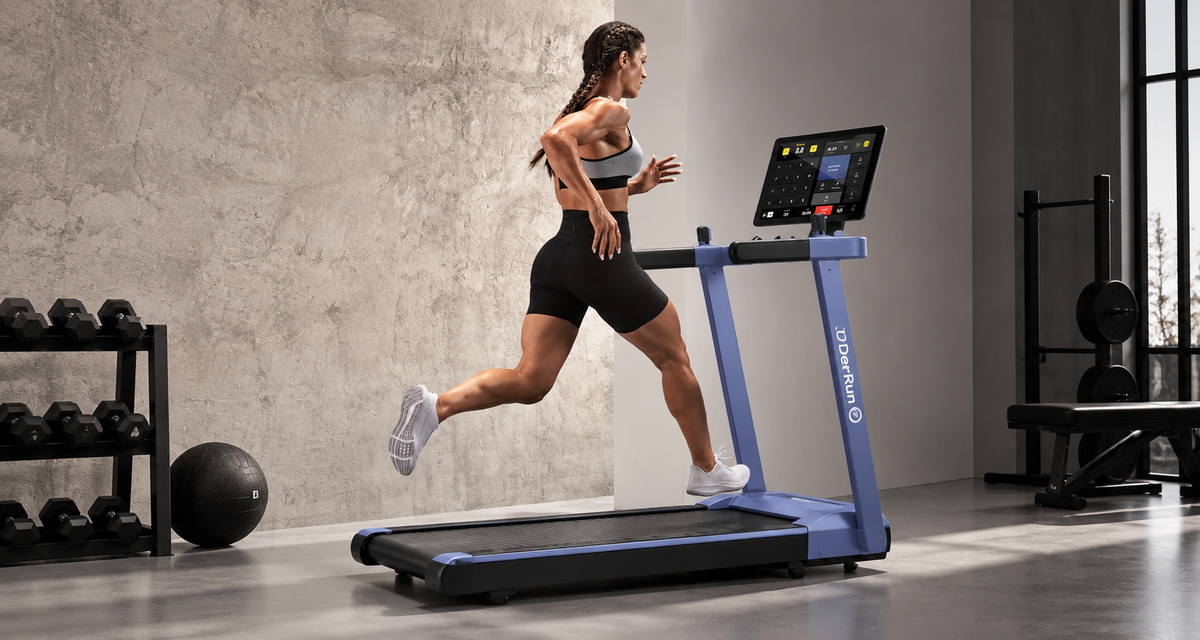


Leave a comment
All comments are moderated before being published.
This site is protected by hCaptcha and the hCaptcha Privacy Policy and Terms of Service apply.