








A home treadmill is easier to use regularly when it feels clean, stable and ready to go. A few simple checks can help protect the machine, keep the walking area comfortable and prevent small issues from interrupting your routine.
Maintenance does not need to be complicated. Most day-to-day care comes down to good placement, regular cleaning and paying attention when the machine begins to sound or feel different.
Always follow the instructions supplied with your treadmill, as maintenance requirements can vary between models. The steps below provide a practical routine for everyday home use.
 A firm, level surface and a suitable mat help create a stable home treadmill setup.
Choose a Firm, Level Position
The surface beneath a treadmill affects how stable it feels.
Place the machine on a firm, level floor with clear space around it. An uneven surface can make the treadmill rock during use and may cause the belt to feel as though it is moving to one side.
If the machine has adjustable feet, check that they make even contact with the floor. Do not try to correct a significant slope by placing loose cardboard, folded fabric or other unstable items beneath the frame.
For wooden, laminate or tiled floors, a suitable treadmill mat can help protect the surface and create a more secure base. It may also help reduce vibration travelling into nearby rooms, which can be useful in flats and shared homes.
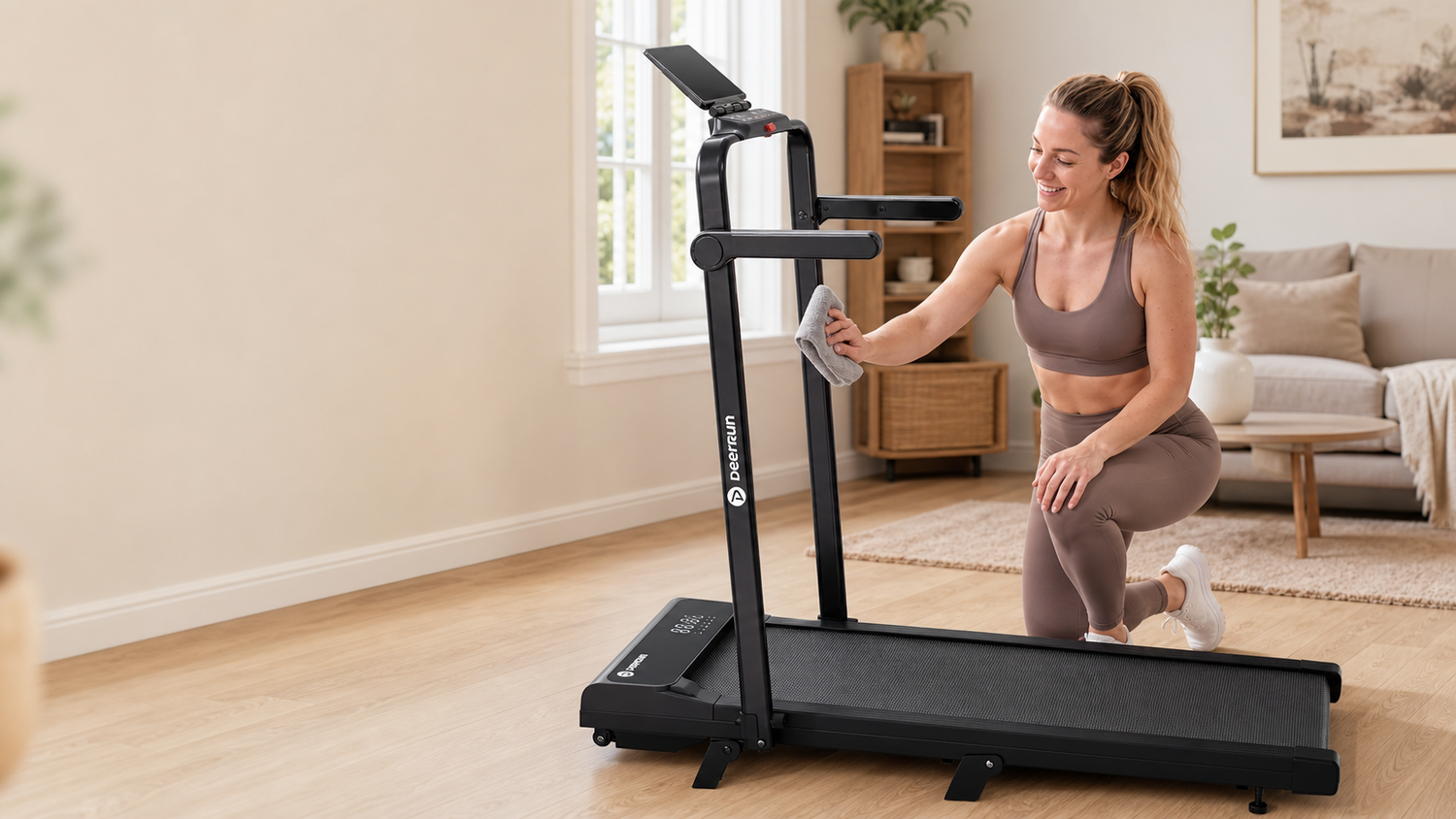
 Switch the treadmill off before wiping the handrail, controls and side rails with a soft cloth.
Wipe the Machine After Regular Use
Sweat, dust and fibres can collect around the display, handrail and edges of the walking belt.
After a session, switch off the treadmill and allow it to stop completely. Wipe the surfaces you touch with a soft, slightly damp cloth, then dry them. Avoid pouring water or cleaning spray directly onto the display, motor cover or belt.
Pay particular attention to:
- the handrail and controls
- the top and sides of the motor cover
- the side rails beside the belt
- the area where dust collects beneath the machine
Strong household chemicals may damage finishes or leave the belt slippery. Use the cleaning method recommended in the product manual.
Keep the Area Around the Belt Clear
Small items can easily find their way beneath a treadmill, especially when it is used in a living room, bedroom or home office.
Before each session, check for cables, clothing, pet toys and other objects near the belt. Vacuum or sweep around the machine regularly, but unplug it first and avoid pushing attachments into openings around the motor cover.
If your treadmill folds, inspect the floor before lowering it. This helps prevent objects from becoming trapped beneath the deck or frame.
Check How the Belt Feels
The walking belt should feel smooth and consistent beneath your feet.
If it begins to hesitate, slip, rub heavily or move noticeably towards one side, stop using the machine and check the troubleshooting section of the manual. Belt tension and alignment adjustments must be made carefully and may differ between models.
Do not keep tightening the belt simply because it looks slightly off-centre. A belt that is too tight can place unnecessary strain on the treadmill, while a belt that is too loose may slip during use.
Make small adjustments only when the manual explains the correct process. If the problem continues, contact customer support before using the machine again.
Lubricate Only as Directed
Some treadmills require periodic lubrication between the walking belt and deck. Others may arrive pre-lubricated or follow a different maintenance schedule.
Check your model instructions before applying anything. Use only the lubricant type recommended by the manufacturer and follow the stated quantity and interval.
Adding too much lubricant can create its own problems, including residue around the edges of the belt. Using an unsuitable product may damage the belt or deck.
If you are unsure whether lubrication is required, it is better to check the manual or ask the support team than to guess.
Listen for Changes During a Workout
Every treadmill has a normal operating sound. Over time, you will become familiar with the sound and feel of your own machine.
Pause the session if you notice:
- a new knocking or scraping sound
- repeated belt slipping
- unusual vibration
- a burning smell
- controls that respond inconsistently
Switch the machine off, unplug it and inspect the surrounding area. Check that the treadmill is level and that nothing is touching the moving parts.
If the cause is not obvious, do not remove covers or attempt internal repairs unless the manual specifically tells you to do so. Contact qualified support instead.
Fold and Move the Treadmill Carefully
Foldable treadmills are useful in UK homes where one room may need to serve several purposes. However, folding and moving the machine correctly is part of looking after it.
Turn the power off, unplug the cable and allow the belt to stop fully before changing the treadmill position. Secure any folding sections according to the manual and use the built-in transport wheels where provided.
Move the treadmill slowly across a clear, level route. Avoid pulling it by the display, handrail or power cable.
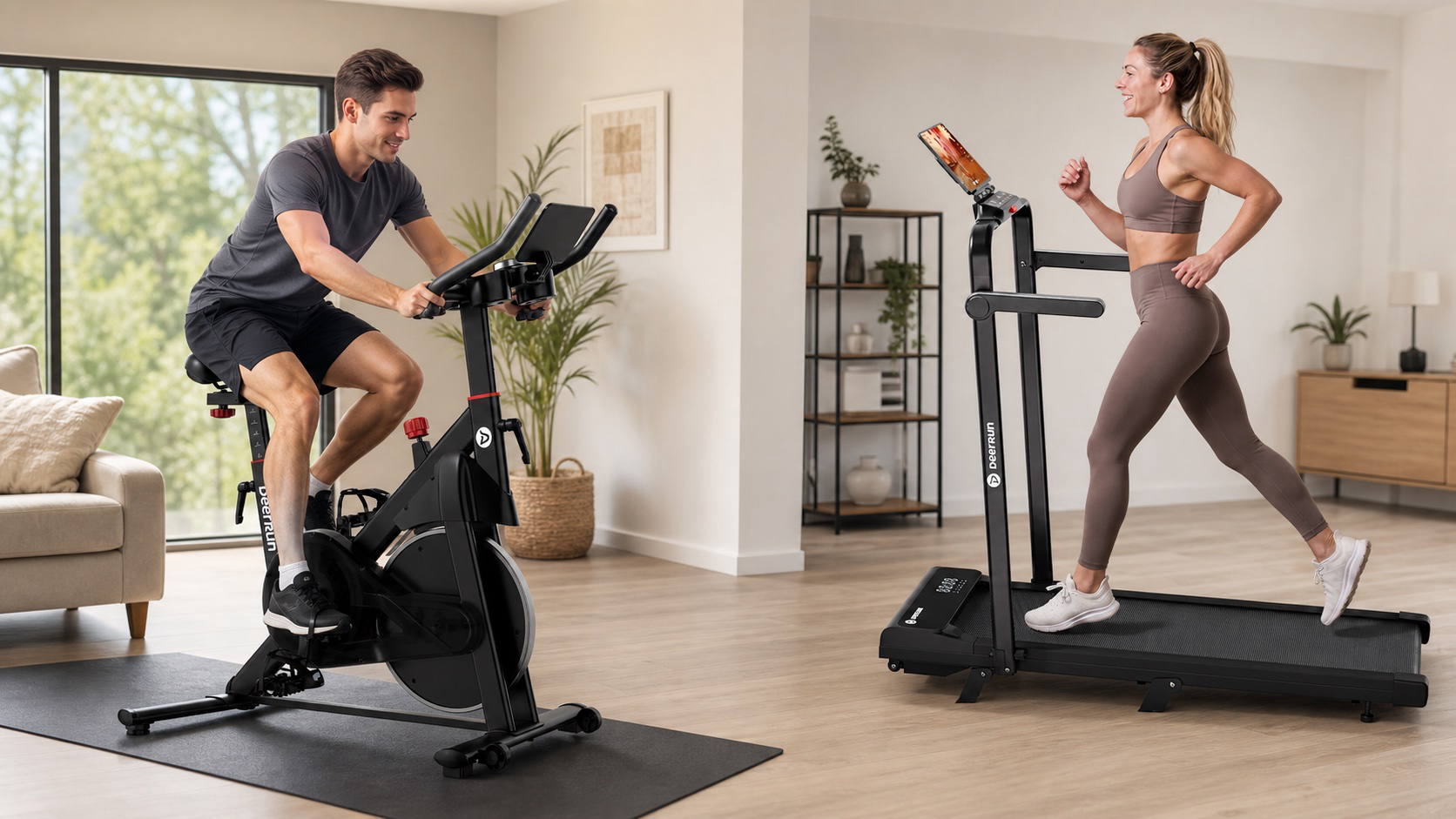
The DeerRun A6 Plus foldable treadmill is designed for walking and running while offering more practical storage for a home environment. As with any folding model, check that the frame is locked in the correct position before starting a session.
 When the treadmill is not in use, keep it unplugged with the cable arranged neatly in a dry indoor space.
Store It in a Dry Indoor Space
A home treadmill should be kept away from damp, rain and large temperature changes.
Garages, conservatories and outdoor buildings can become cold or humid, particularly during a UK winter. Unless the product instructions confirm that such a space is suitable, a dry indoor room is normally the safer choice.
Keep the power cable loosely arranged rather than tightly wrapped or trapped beneath the machine. If the treadmill will not be used for a while, unplug it and keep the belt surface free from dust.
A Simple Maintenance Schedule
After Each Use
- allow the belt to stop completely
- switch off the machine
- wipe the controls and handrail
- remove any items near the belt
Once a Week
- clean dust from around and beneath the treadmill
- check that the machine feels level and stable
- inspect the power cable for visible damage
Once a Month
- check whether the belt feels smooth and centred
- inspect folding points and visible fixings
- review the manual for lubrication or service intervals
The right schedule will depend on how often the treadmill is used. A machine used by several people may need checks more frequently than one used for a few short walks each week.
When to Contact Support
Stop using the treadmill and seek advice if a problem affects stability, power, belt movement or safe operation.
When contacting support, it can help to provide the product model, order details and a short video showing the issue. Clear information makes it easier for the team to understand what is happening and recommend the correct next step.
Avoid taking the machine apart unless you have been instructed to do so. Internal electrical and mechanical work should be handled by a suitable professional.
Final Thoughts
The most useful treadmill maintenance routine is a simple one you can follow consistently.
Keep the machine on a level surface, clean the areas you touch, prevent dust and loose items from reaching the belt, and pay attention to changes in sound or movement. Follow the model-specific manual for belt adjustment and lubrication rather than relying on a general rule.
A few minutes of regular care can keep your treadmill ready for the next walk or run and make home exercise feel easier to continue.


Leave a comment
All comments are moderated before being published.
This site is protected by hCaptcha and the hCaptcha Privacy Policy and Terms of Service apply.