








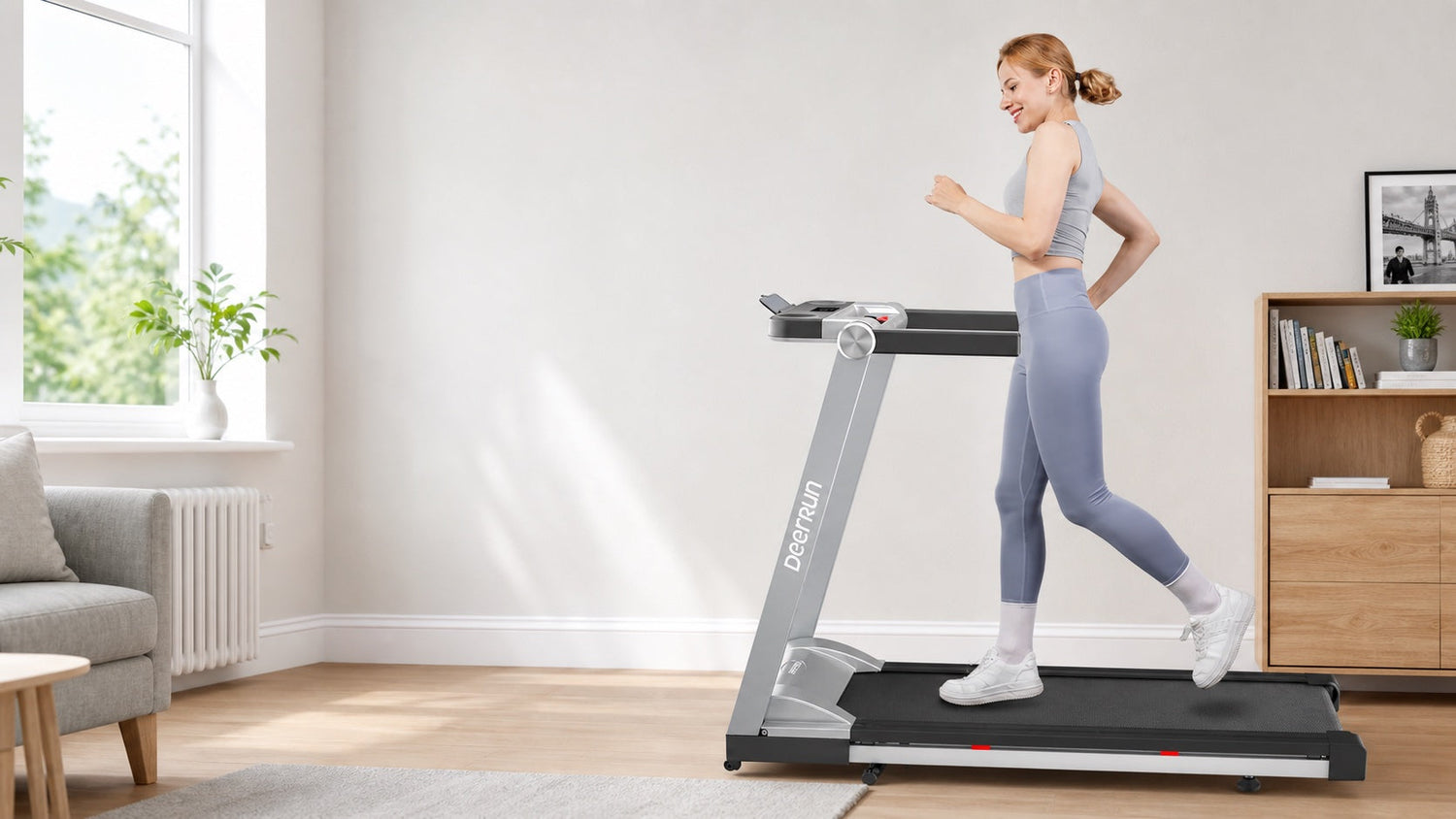
Starting to run can feel difficult when the first goal is simply “run for as long as possible”. A more practical approach is to alternate walking and running, keep the early sessions short and allow your body time to adjust.
A treadmill makes this progression easier to control. You can set a steady speed, exercise indoors and reduce the pace as soon as your technique begins to feel uncomfortable.
This four-week plan is designed as a gentle framework for new runners. Adapt the timing to your current fitness, and stop if you feel pain, dizziness or unusual discomfort.
 A clear floor area, secure footwear and the safety key are useful parts of a simple pre-run check.
Before Your First Treadmill Run
Set up the machine on a firm, level surface with clear space around it. Learn how to start and stop the belt, adjust the speed and use the safety key before the session begins.
Wear comfortable running shoes and clothing that does not catch on the machine. Keep water nearby, but place it in a suitable holder rather than on the floor beside the moving belt.
Begin every session with walking. The warm-up gives you time to check your posture, become familiar with the belt and decide whether the planned workout feels appropriate that day.
Choose a Comfortable Running Pace
Your beginner running pace should feel controlled. It should not force you to hold the handrails, reach forward with every step or move towards the back of the belt.
The number on the display is less important than your position and technique. Two people at the same speed can experience a very different level of effort.
Start with a pace that feels like an easy jog rather than a sprint. During the running intervals, you should still be able to reduce speed calmly and return to walking without losing balance.
 Short running intervals separated by walking recoveries can make the first few weeks feel more manageable.
Use Walking and Running Intervals
Intervals allow you to practise running without needing to maintain it continuously.
The walking sections are not failed running. They are planned recovery periods that help you keep the complete session controlled. As the weeks progress, the running intervals become longer while the walking breaks remain available.
Complete two or three sessions each week, leaving at least one easier or rest day between running sessions. If a week feels too difficult, repeat it before moving on.
Week 1: Become Comfortable on the Belt
The first week is about control rather than distance.
Session Structure
- walk gently for 5 minutes
- run easily for 1 minute
- walk for 2 minutes
- repeat the run-and-walk block 5 times
- walk gently for 5 minutes to cool down
Keep your steps light and look ahead. Avoid holding the handrails unless you need them briefly to regain stability. If one minute of running feels too long, shorten the interval and complete the session comfortably.
Week 2: Extend the Running Sections
Once the one-minute intervals feel familiar, add a little more running time.
Session Structure
- walk gently for 5 minutes
- run easily for 2 minutes
- walk for 2 minutes
- repeat the run-and-walk block 5 times
- walk gently for 5 minutes to cool down
Do not increase the running speed simply because the intervals are longer. Keeping the same controlled pace allows you to focus on posture and rhythm.
Week 3: Build a Steadier Rhythm
In the third week, the running periods become longer than the walking recoveries.
Session Structure
- walk gently for 5 minutes
- run easily for 3 minutes
- walk for 90 seconds
- repeat the run-and-walk block 5 times
- walk gently for 5 minutes to cool down
Use the first running interval as a check. If your breathing becomes difficult immediately or your stride feels heavy, reduce the pace for the remaining intervals.
Week 4: Move Towards Continuous Running
The final week introduces longer blocks without requiring one uninterrupted run.
Session Structure
- walk gently for 5 minutes
- run easily for 5 minutes
- walk for 2 minutes
- repeat the run-and-walk block 4 times
- walk gently for 5 minutes to cool down
Finishing this week does not mean you must immediately run for 30 minutes. You can repeat the same structure, add one minute to selected running blocks or keep a walk break whenever you need it.
Should Beginners Use Incline?
A flat or very gentle setting is normally the simplest place to learn treadmill running. It lets you focus on speed, balance and technique without adding several challenges at once.
Incline increases the effort and changes how the session feels. It can be useful later for walking workouts or varied running sessions, but it is not necessary during your first progression.
If you choose to use incline, make small changes and avoid increasing incline and speed at the same time.
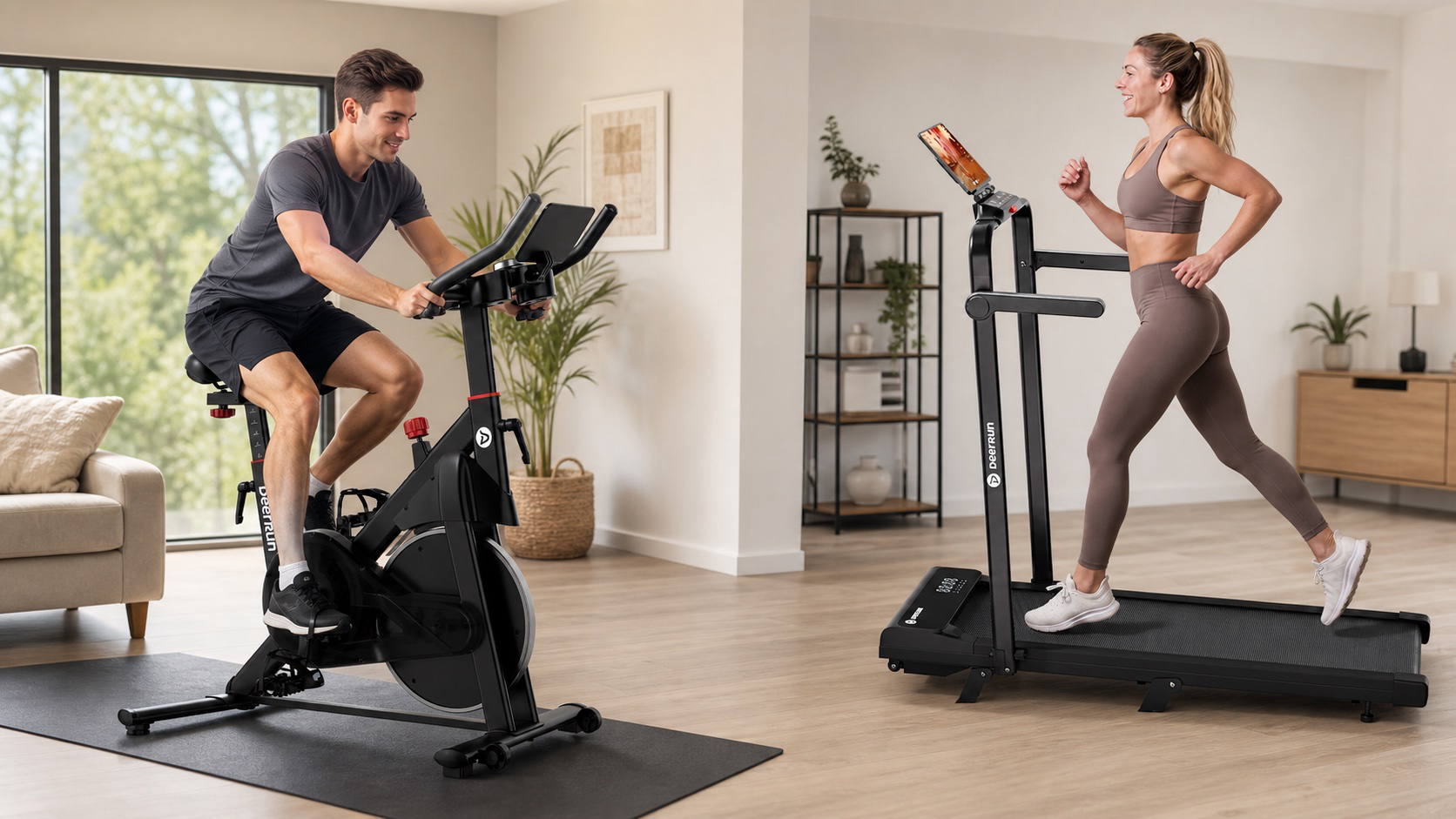
 A folding treadmill can make it easier to reclaim floor space between planned sessions.
A Home Treadmill for Walking and Running
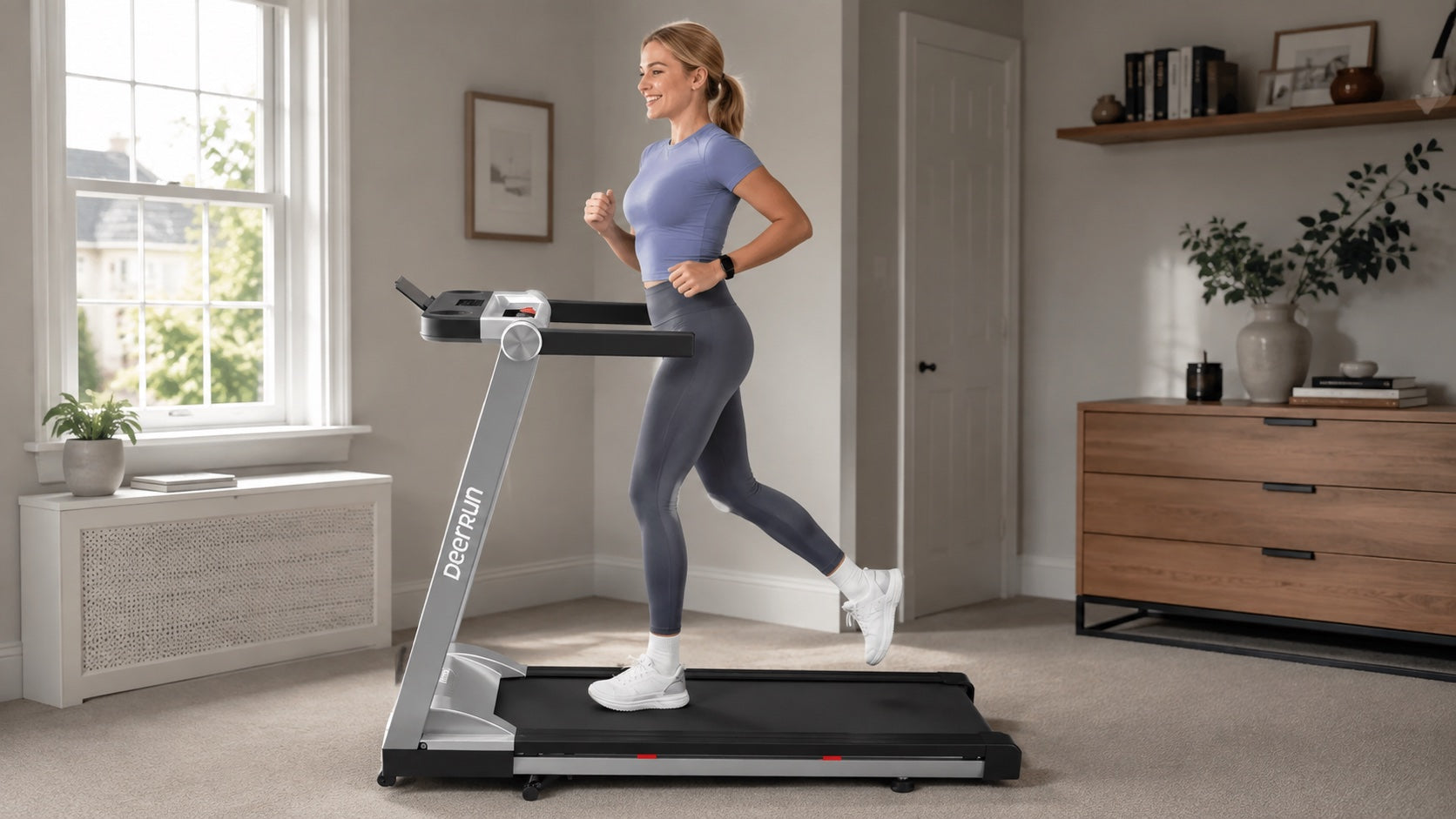
The DeerRun A1 Pro folding treadmill supports walking and running at home, with a 6% incline, speeds up to 16 kph and a folding design for more practical storage.
For a beginner plan, use the available speed range gradually. The higher maximum speed is not a target for early sessions. A controlled jog that allows you to maintain good position is more useful than trying to reach a particular number.
The folding frame can help in a multipurpose room, but always unfold and secure the treadmill according to the instructions before use.
Common Beginner Mistakes
Increasing Speed Too Quickly
Faster running is not the only form of progress. Completing the planned intervals with relaxed posture and consistent control is a meaningful improvement.
Skipping the Walking Warm-Up
Beginning at running speed gives you less time to settle into the movement. Use the first five minutes to check the machine, your shoes and how your body feels.
Holding the Handrails Throughout the Run
Continually pulling on the handrails can change your running position. Reduce the speed until you can move naturally without relying on them.
Comparing Every Session
Sleep, stress and daily activity can all affect how running feels. One slower session does not mean the plan is failing.
Running Every Day
Recovery is part of the plan. Leave space between running days and use easier walking, cycling or rest when appropriate.
How to Progress After Week 4
Choose one small change at a time.
You could:
- add one minute to the first two running intervals
- shorten selected walking breaks slightly
- repeat Week 4 until it feels more comfortable
- complete one easy session without changing anything
Avoid increasing speed, incline, total time and frequency in the same week. A gradual change is easier to assess and gives you a clearer idea of what your body is responding to.
When to Pause the Plan
Normal exercise can feel challenging, but sharp pain, dizziness, chest discomfort or a change in your usual health should not be ignored.
Stop the treadmill safely and seek appropriate medical advice when needed. If you are returning after injury, pregnancy, illness or a long period without exercise, professional guidance can help you choose a suitable starting point.
Final Thoughts
You do not need to run continuously to become a runner. Walking and running intervals give you time to build confidence, practise technique and create a routine that feels manageable.
Begin slowly, keep the pace controlled and repeat a week whenever you need more time. Progress comes from consistent sessions, not from turning every workout into a test.
After four weeks, the most important result is not a particular speed or distance. It is having a structure you feel ready to continue.


Leave a comment
All comments are moderated before being published.
This site is protected by hCaptcha and the hCaptcha Privacy Policy and Terms of Service apply.