







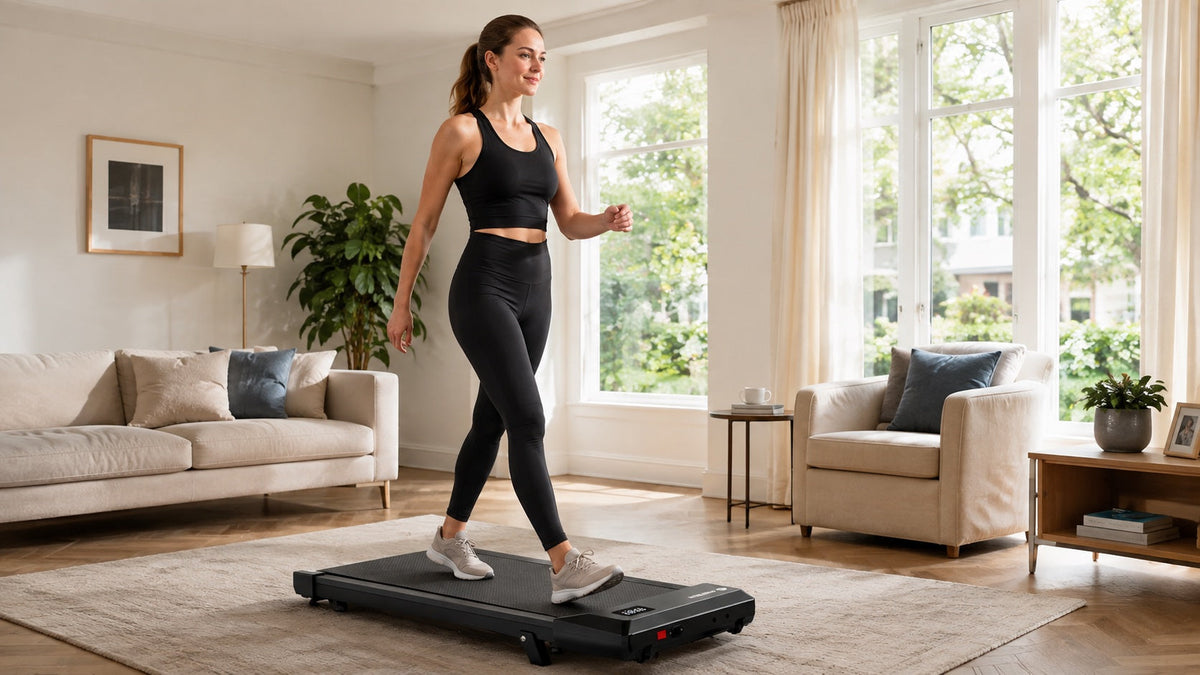
Walking pads are designed to save space, but a smaller machine is not automatically the best choice for every home. The walking belt needs to feel comfortable for your stride while the complete product still fits the room and storage area.
Before comparing features, measure your available floor space and think about how you naturally walk. The right balance is personal: a compact user may value easier storage, while someone with a longer stride may prefer more belt length.
Understand Belt Length and Width
Belt length is the usable front-to-back walking area. A longer belt gives each step more room to land. Belt width affects how much side-to-side space you have while staying centred.
Product dimensions are different from belt dimensions. Check both figures so you know how much room the machine occupies and how much walking surface it provides.

Consider Your Natural Stride
Taller users and people who take longer steps may feel more confident on a longer belt. Shorter steps at a gentle pace generally require less space than brisk walking.
Do not deliberately overstride to use more of the belt. Walk naturally, keep your gaze ahead and choose a controlled speed that allows you to remain centred.
Speed Changes the Space You Need
As walking speed increases, stride length and the need for recovery space may change. A walking pad intended for 1–6 kph should be used for walking, not improvised running.
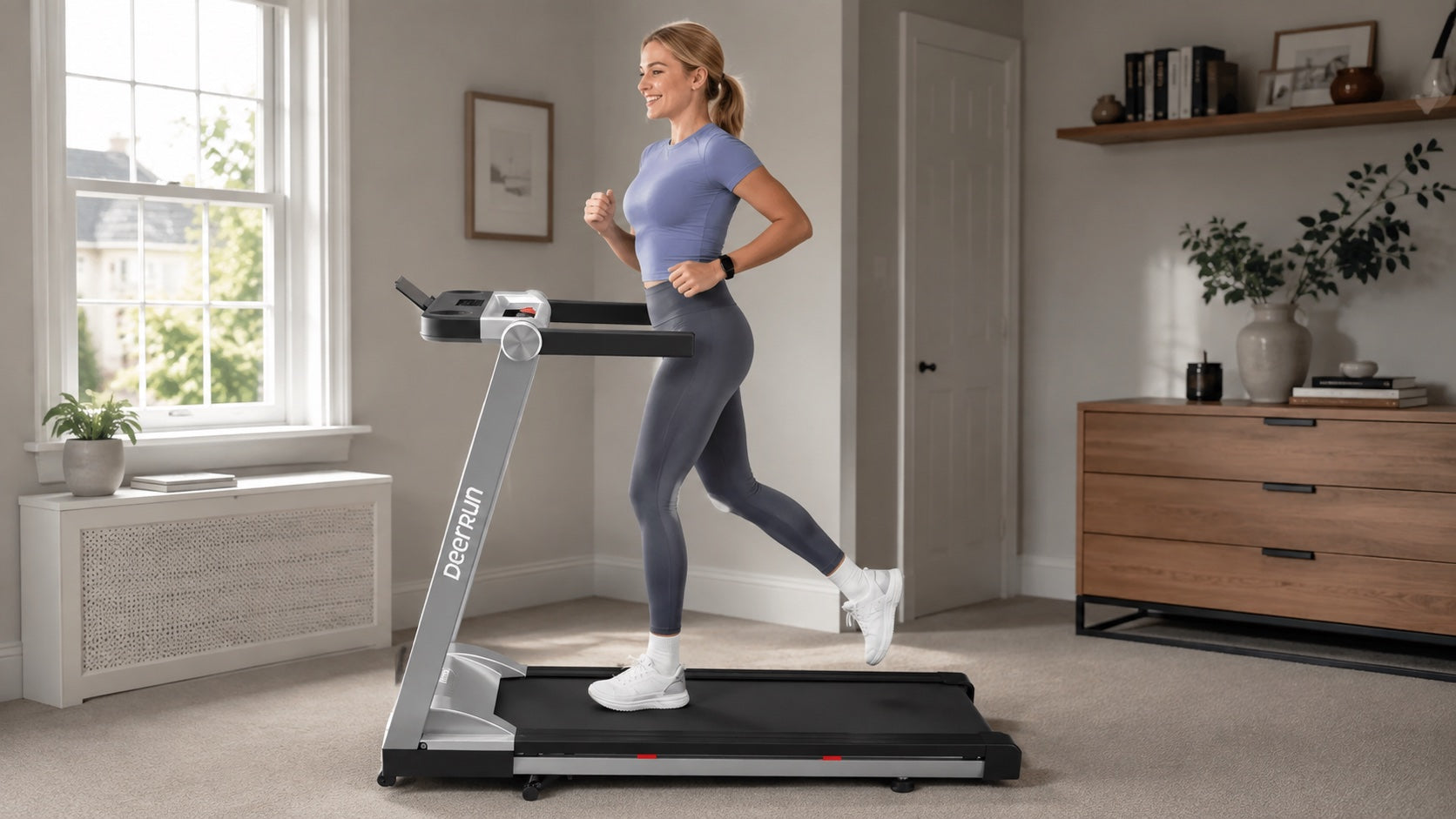
If you plan to jog or run, choose a treadmill designed for those speeds, usually with a longer deck and handrail structure.

Measure the Complete Floor Area
Measure the product footprint and leave safe clearance around it according to the user manual. Include the power connection, nearby doors, furniture and the route you will use to move the machine.
Avoid squeezing a walking pad between objects just because its listed dimensions technically fit. You need enough room to step on, step off and stop safely.

Think About Storage Before Buying
Decide where the walking pad will live after each session. Measure the height beneath a sofa or bed if you plan to slide it underneath, and check the weight and wheel position if it must be moved frequently.
A model that is slightly longer but can remain in place may be more practical than a shorter model that requires awkward daily lifting.
Match the Belt to the Activity
For slow movement during simple desk tasks, a compact belt may be sufficient. For dedicated brisk walks, a longer belt can provide a more natural step and additional confidence.
Your desk setup also matters. The desk should be stable, high enough for comfortable posture and positioned without forcing you towards the front of the belt.
Test Comfort at a Low Speed
When first using a walking pad, start slowly and focus on position. Your steps should land comfortably without repeatedly reaching the front housing or drifting towards the rear edge.
If the belt feels too short at a safe walking pace, do not solve the problem by taking unnatural steps. Reassess the speed, setup and whether the model suits your stride.
A Longer-Belt Walking Pad Option
The DeerRun Q2 Urban Plus uses a 100 × 38 cm walking belt, compared with the standard Q2 Urban's 90 × 38 cm belt. It supports speeds from 1–6 kph, a 7% manual incline and users up to 136 kg, while the complete product measures 114.2 × 50 × 10 cm.
The extra belt length may suit users who want more room for daily walking while retaining a low-profile design. Compare the measurements with your own home before deciding.
Choose Space You Will Actually Use
The best walking pad is not simply the smallest or longest model. It should provide enough walking room, fit a safe location and be easy enough to access that you use it regularly.
Measure carefully, prioritise a natural stride and choose the product category that matches your intended speed. Comfort and practicality are the foundations of a walking habit that lasts.


Leave a comment
All comments are moderated before being published.
This site is protected by hCaptcha and the hCaptcha Privacy Policy and Terms of Service apply.