








Word Count: Approx. 1,400 words | Reading Time: About 7 minutes
When shopping for a Walking Pad for the first time, most people start by comparing speed, size and price. But once you actually begin using one every day, features such as whether it has a handle, how it folds, and how you adjust the speed can have a much bigger impact on how the machine fits into your routine.
If you mainly want an under-desk Walking Pad for walking while you work, a low-profile design and convenient controls may matter more than having a full handrail. But if you want to walk during the day and run in the evening, a 2-in-1 treadmill with a foldable handle and a dedicated running mode may be more practical.
So before asking, “Is a Walking Pad with a handle better?”, start with three simpler questions:
Where will you use it most often? Will you mainly walk or run? And how do you plan to control and store it every day?
1. Mainly Walking Under a Desk? A Low-Profile Design May Matter More Than a Handle
If your Walking Pad treadmill will spend most of its time beneath a standing desk, your routine will probably be fairly simple: walking slowly while working, getting extra steps during meetings or moving for 10–15 minutes after sitting for a long time.
In this situation, whether the machine fits comfortably beneath your desk can matter more than whether it has a full handlebar.
The DeerRun Q2 Urban supports speeds from 1–6 km/h, making it well suited to low-speed walking.
It measures approximately 108.2 × 50 × 10 cm, with a footprint of about 0.54 m². Its slim 10 cm profile also makes it easier to place beneath a standing desk, beneath a suitable bed or in another low-clearance storage area.
When you are walking while working, you usually do not need much speed. Around 2.4–3.2 km/h can be more comfortable for typing, reading your screen and joining online meetings.
If under-desk walking is your main goal, a slim profile, comfortable low-speed operation, easy mobility and convenient controls may be more useful than adding a full handrail.

2. Want to Run Too? A Handle Becomes More Useful
Once your routine changes from walking only to walking + running, your buying priorities change too.
At low walking speeds, a slim under-desk treadmill is convenient because it fits easily beneath a desk. Once you start running, however, a higher speed range, a stable front structure and a proper running mode become more important.
The DeerRun A6 Plus is a 2-in-1 walking and running treadmill. With the handrail folded down, it supports speeds from 1–6 km/h, making it suitable for everyday walking.
Raise and secure the handrail, and the maximum speed increases to 12 km/h, allowing the same machine to cover jogging and everyday home running.
This type of foldable Walking Pad with a handle is particularly useful if you want to walk during the day and run later in the evening.
During working hours, you can fold the handrail down and walk for 20–30 minutes at a comfortable pace. When you have more time for a complete workout, raise the handrail and switch to running.
One machine can support both routines.
So the value of a handle is not simply that it gives you something to hold. What matters more is whether the handle is part of a design that lets the treadmill switch easily between walking and running modes.

3. Does a Walking Pad Need a Remote Control?
For a Walking Pad without a full front console, a remote control can make a noticeable difference in everyday use.
If you are walking while working, having to bend down and find buttons every time you want to change the speed can quickly become inconvenient.
A Walking Pad with remote control is particularly useful for low-speed, short walking sessions because you can adjust the speed or operating status without interrupting what you are doing.
The DeerRun Q2 Urban includes a remote control and LED display, allowing you to check workout information and make quick adjustments while using it as an under-desk Walking Pad. It can also be controlled through the PitPat App via Bluetooth.
Running creates a different set of needs.
When you are running, your attention is naturally directed forwards, so a full handle structure and easily accessible front controls can be more convenient, especially when you need to change speed frequently.
That means a remote control is not automatically “better”. Its usefulness depends on how you plan to use the machine:
- Under-desk walking: prioritise convenient remote operation.
- Running: prioritise accessible front controls and a stable handrail structure.
- Walking + running: consider both the handle design and how easily you can adjust speed.
4. Will a Handle Make the Treadmill Harder to Store?
Adding a handle changes both how a treadmill is used and how it needs to be stored.
The DeerRun A6 Plus measures approximately 135.3 × 55.3 × 116.3 cm when in use.
Its raised handrail supports walking and running, but when your workout is finished, the handrail can be folded down.
Once folded, the machine is approximately 12.4 cm thick—roughly comparable to a slim storage container.
That makes it easier to move the treadmill against a wall, beside a cabinet or into another low-clearance storage area instead of leaving the full handrail structure upright all day.
For people who want both walking and running, this is where a foldable treadmill or 2-in-1 Walking Pad can make sense:
Raise the handrail when you want to run. Fold it down again when you are finished.
You get the extra structure when you need it without having a full upright treadmill permanently taking up room.
5. Having a Handle Doesn’t Mean You Should Hold It the Entire Time
Once a treadmill has a handrail, it is easy to assume that holding onto it throughout your workout will make walking or running more stable.
But during normal walking or running, the handrail is better used for getting on and off the treadmill, briefly regaining balance or making adjustments—not as something you need to lean on for the entire workout.
If you are constantly putting your body weight onto the handrail, your posture and natural walking pattern can become less natural.
If you feel that you cannot walk comfortably without holding on at a low speed, reduce the speed first and make sure the treadmill is positioned securely.
For everyday walking at around 2.4–4.0 km/h, focus on staying upright and allowing your arms to move naturally rather than gripping the handrail continuously.
A few simple habits can help:
- Make sure the belt has stopped before getting on or off the treadmill.
- Start at a low walking speed and get comfortable before increasing it.
- Stay upright and look forwards while walking.
- If you have to hold the handrail continuously to keep up, reduce the speed or incline.
6. Q2 Urban vs. A6 Plus: Which Walking Pad Is Right for You?
If your main goals are working from home, under-desk walking or getting more daily steps, the DeerRun Q2 Urban offers a more straightforward setup.
Its 10 cm low-profile design, 1–6 km/h speed range and remote control make it well suited to low-speed walking beneath a desk.
If you want both walking and running, the DeerRun A6 Plus offers more flexibility.
With the handrail folded down, you can use it for walking. Raise the handrail, and the maximum speed increases to 12 km/h, so you do not need separate machines for walking and running.
| Your Main Need | What to Prioritise | Better Fit |
|---|---|---|
| Mostly walking and under-desk use | Slim profile, remote control, easy mobility | DeerRun Q2 Urban |
| Walking + running | Foldable handrail, maximum speed, running belt | DeerRun A6 Plus |
| Low-clearance storage every day | Machine thickness and storage height | Low-profile Walking Pad |
| Dedicated running mode | Handrail structure, speed range, front controls | 2-in-1 foldable treadmill |
If most of your walking happens while you work, the DeerRun Q2 Urban is the more practical choice.
If you need one machine for both walking and running, the DeerRun A6 Plus makes better use of its foldable handrail and wider speed range.
A Handle Isn’t a Must-Have—How You Use Your Walking Pad Matters More
There is no universal answer to whether a Walking Pad should have a handle.
If you mainly walk beneath a standing desk, a slim design, remote control and easy storage may matter more.
If you also want to run, a Walking Pad with a foldable handle that can switch into a higher-speed running mode becomes much more useful.
Before buying, think about your most common use case first. Then compare the handle, remote control, speed range and folding design.
That is usually more useful than simply choosing the machine with the longest feature list.
Decide How You’ll Use It Before Deciding Whether You Need a Handle
Choose a DeerRun Walking Pad or 2-in-1 treadmill that fits the way you work, walk, run and store your equipment at home.
Explore DeerRun Walking Pads →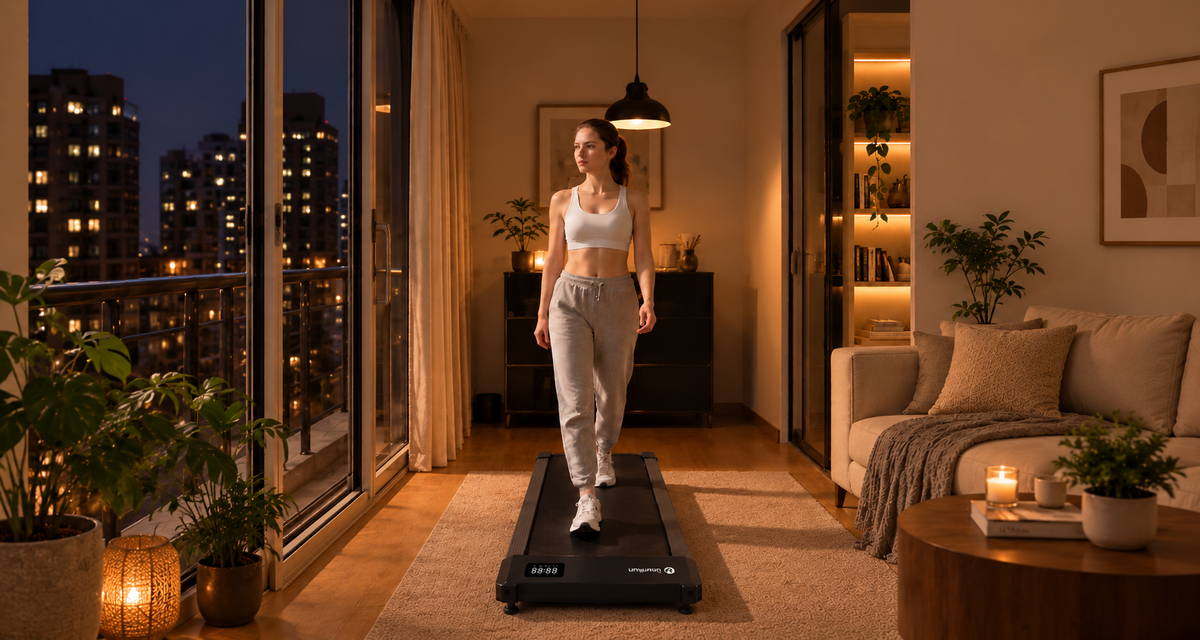


Leave a comment
All comments are moderated before being published.
This site is protected by hCaptcha and the hCaptcha Privacy Policy and Terms of Service apply.