








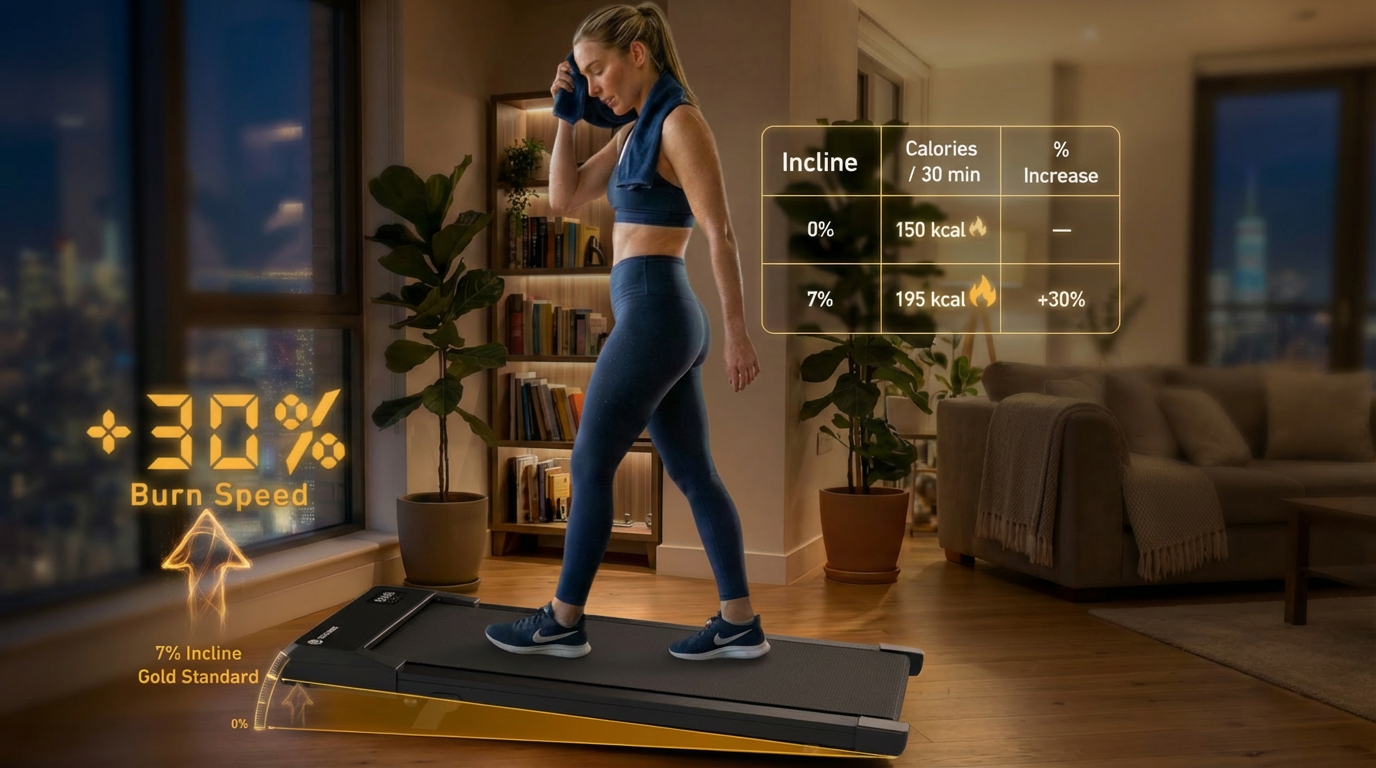
Treadmill Incline Guide: Why Walking or Running on an Incline Makes a Difference
Add Incline. Feel the Difference.
Sometimes the simplest adjustment can transform a workout. Adding incline to a treadmill changes how your body works, how your muscles engage, and how effective your exercise becomes.
Instead of simply moving faster on a flat surface, incline walking or running increases effort naturally. The body has to push upward, activating more muscle groups and demanding more energy.
For many people, this feels more engaging and more rewarding than fast flat running.
Same time. Greater demand.
Many users prefer incline walking on a home treadmill because it adds challenge without forcing them to run at high speeds.
- For efficiency-focused users: Make your usual 30 minutes work harder.
- For joint-conscious users: Incline walking often feels smoother than sprinting on a flat treadmill.
A small incline can turn a simple walk into a powerful workout.
What Does Incline Do on a Treadmill?
When a treadmill is raised, even slightly, your body has to work against gravity. This produces several important changes:
Higher calorie burn
Walking uphill requires more energy than walking on flat ground.
Greater muscle activation
Incline walking engages the glutes, hamstrings, and calves more intensely.
Improved cardiovascular challenge
Your heart and lungs work harder, improving endurance.
More realistic outdoor simulation
Outdoor terrain is rarely flat. Incline training recreates natural terrain indoors.
This is why incline has become one of the most requested features in modern home treadmills and walking pads.
Different Incline Levels and What They Feel Like
Not every incline level serves the same purpose. Even small increases can change how a workout feels.
5% Incline: A Gentle Upgrade for Everyday Walking
A moderate incline is often the easiest way to upgrade a basic home workout.
The A6 Plus 2-in-1 treadmill features a 5% manual incline, which adds noticeable resistance while still keeping workouts comfortable.
It is a practical option for beginners or users who want to alternate between walking and light running without increasing speed too much.
Typical use:
Steady walking sessions, beginner cardio, everyday movement at home.
6% Incline: A Balanced Training Level
A slightly steeper incline provides a more structured workout without becoming overly demanding.
The A1 Pro treadmill, with 6% manual incline, is designed for stable and consistent home training. The incline helps simulate uphill walking or jogging, making workouts feel more purposeful.
Instead of running faster, users can simply raise the incline and maintain a manageable pace.
Typical use:
Regular home workouts, incline walking, light jogging.
7% Incline: Walking Pad with a Real Challenge
Incline walking pads are becoming increasingly popular among users who want a compact fitness solution but still want a meaningful workout.
The Q2 Urban walking pad includes a 7% manual incline, which significantly increases intensity compared with flat walking pads.
This means users can stay at walking speeds while still feeling the effort of climbing.
Typical use:
Home office walking, indoor walking workouts, efficient low-impact training.
12% Incline: Power Walking and Fat-Burning Sessions
Once incline reaches double digits, the experience changes dramatically.
The Z10 walking pad, with 12% automatic incline, is designed for users who want strong walking workouts without running.
At this level, the body engages the posterior chain more strongly, particularly the glutes and hamstrings. Many users prefer this style of training because it increases intensity without requiring high speeds.
Typical use:
Power walking, weight-management workouts, hill training.
15% Incline: A True Hill Training Experience
High incline treadmills bring the feeling of climbing hills indoors.
The X20 flagship treadmill, with 15% automatic incline, allows users to simulate steep outdoor terrain. This creates one of the most demanding forms of treadmill training without needing sprint speeds.
At higher inclines, walking itself becomes a powerful strength and cardio workout.
Typical use:
Serious training, endurance improvement, advanced calorie-burn sessions.
Incline vs Speed: Which Is Better?
Many people assume that the only way to make treadmill workouts harder is to increase speed. However, incline training offers an alternative approach.
Increasing speed stresses the body through impact and pace. Incline training, on the other hand, increases workload through resistance.
For many home users, incline training offers a better balance.
- It allows effective workouts without high running speeds
- It reduces the need for sprint-style workouts
- It often feels smoother on joints compared with fast running
This is why incline walking has become a preferred method for many home fitness routines.
Choosing the Right Incline Treadmill for Your Routine
The best incline level depends on how you plan to use the treadmill.
For beginners or everyday walking:
A 5% incline treadmill such as the A6 Plus offers a comfortable introduction.

For balanced home workouts:
The A1 Pro with 6% incline provides stability and variety.

For compact incline walking:
The Q2 Urban walking pad offers a small footprint with a meaningful challenge.

For intense incline walking workouts:
The Z10 walking pad with 12% automatic incline provides strong resistance.

For advanced training:
The X20 treadmill with 15% automatic incline delivers a full hill-training experience.

Final Thoughts
Incline is one of the most effective ways to improve a treadmill workout. By simply raising the running surface, users can increase intensity, activate more muscles, and make every session more productive.
Instead of running faster, many people now choose to walk or run uphill.
Add incline, and the same workout can feel entirely different.



Leave a comment
All comments are moderated before being published.
This site is protected by hCaptcha and the hCaptcha Privacy Policy and Terms of Service apply.